
You are currently browsing the category archive for the ‘Jesus’ category.

Christmas or Communion?
Here in America, Christmas seems to be a much bigger affair than I am accustomed to in South Africa. Many houses are beautifully decorated, almost every one sports at least some form of Christmas decoration, even if just a wreath on the door or a tree in the window. Millions of Dollars are spent on food, gifts, cards and other paraphernalia that relates to Christmas and even the gasoline stations join in by hiking the price of fuel. So it is not unexpected that I have been thinking long and hard about the holiday, it’s meaning and the reasons why people love to celebrate it so lavishly.
It is clear that it is not a Christian celebration since more unbelievers than true believers celebrate the day. So what is it about the season that people, even unbelievers, find so attractive? It seems to have little to do with Jesus and the message of the Gospel and much to do about money, greed and commercialism. Recently a newspaper headline suggested that we should rather call it “techmas”, referring to the emphasis on technology and technological toys and gifts. Even children seem to agree by pulling their noses up at any gift that does not require batteries.
I can not find a single reference in the whole Bible where the Disciples or the early church celebrated His birth. Come to think of it, there is not a single reference to Jesus ever celebrating His own birthday! There is also no instruction in the whole of the Bible to celebrate the birth of the Savior. Unlike His birth, His death is to be celebrated and to be remembered. Jesus instituted the memorial the night before He was crucified (Matthew 26:26). He instructs the disciples to celebrate it (Luke 22:19) and Paul instructs us to remember the Lord (1Corinthians 11). Yet the vast majority of Westerners will celebrate His birth while ignoring His death! Why?
One of the possible reasons lies in the fact that “gentle Jesus, meek and mild” is a lot more user-friendly and manageable than a bloody Savior on a cross. A baby Jesus in a crib, all cute and cuddly sells product much better than One at whose Name every knee shall bow, and the romance of an “illegitimate” child, born in a stable in an obscure village, and Who rose to greatness is far more appealing than the truth that our sin nailed Him to that tree. A helpless baby who makes no demands, other than for food is much more appealing than a risen, glorified Lord who demands our total love, obedience and devotion.
Thus many people prefer to “freeze” the moment and the Child for ever. That way, He is much less threatening and more manageable. We too like think of God in terms of gifts, giving and presents and not as One Who makes just and holy demands. Above all, men like to confine God to a shape and form in which they can manage and control Him. Is this not one of the ways in which we change the glory of the incorruptible God? (Romans 1:23).
Yes, the Almighty Word became flesh and limited Himself to the body of a baby that was helpless and totally dependant upon His parents for everything. But, He is no longer a helpless, cute baby or even a young man. He is the risen, glorious King of Kings and Lord of Lords. He is the One who will soon come to judge the world, destroy His enemies and establish His eternal Kingdom. Every knee shall bow before Him and every tongue shall confess that He is Lord (Philippians 2:10).
His birth was incidental to God’s wonderful plan of salvation. He had to be born in human form in order to relate to us and to be a faithful High Priest but, He did not come to be born: He came to die! It is not His birth that saves us, but His death and resurrection. Many people like to emphasize Jesus’ life as an example, rather than see Him as the One Who died and rose again. They willingly forget that the message of the Gospel is not His life and death, but rather, His death and life. Yes, we like to see Him as the Lamb of God, but forget that He is no longer dumb before those who slaughtered Him. He now has seven horns which represent his Divine power and authority (Revelation 5:6) and when He speaks, the heavens and earth quake. No longer is there no room for Him in the inn, but heaven is His throne and the earth His footstool (Acts 7:49). No longer is He wrapped in swaddling clothes, but now He is “clothed with a garment down to the feet and girded about the chest with a golden band. His head and hair white like wool, as white as snow, and His eyes like a flame of fire; His feet like fine brass, as if refined in a furnace, and His voice as the sound of many waters; He had in His right hand seven stars, out of His mouth went a sharp two-edged sword, and His countenance like the sun shining in its strength.” (Revelation 1:13-16).
Is it wrong for us to celebrate His birth? Yes, I think it is wrong if we do not give far more importance to remembering His death than His birth. Here’s the catch: How many of us look forward to the Lord’s Table and put as much time into preparing for Communion as we do for Christmas. Most Christians will miss the Lord’s Table for the slightest excuse, yet they will travel thousands of miles to be present at a Christmas celebration. And don’t tell me it’s not about Christmas but that it is time to be with family. So is the Lord’s Supper not a time to be with family? And the excuse that it is a holiday also does not work – every Sunday is a holiday.
You can celebrate Christmas as long as at least twelve times a year (preferably 52 times) you will look forward to, and put as much time into preparing your heart and mind for the Lord’s table as you do for Christmas and if you will spend as much money on giving to the Lord each week as you give to others at Christmas. Isn’t it strange that amid all the emphasis on gifts and giving around Christmas, that this is the month when giving to the church is the lowest of the year! Something has to be wrong with this picture.
For too long the church has allowed the world to shape it’s traditions and values. It should be the other way around. It is time for us to get back to the priorities and principles of the Bible and not of the world. Enjoy your celebrations but determine to give more importance to the Lord’s table than Christmas – that’s the way it should be.
written 12/25/2006
source: found HERE
Over at the Earthquake Resurrection blog, David Lowe has posted a very powerful 5 minute video. I did not get through it without tears and it sent me to my knees in gratitude for what our Father gave for us.
Please click on the link
http://earthquakeresurrection.blogspot.com
to watch:
The Bridge: A Father’s Choice
A Cinematic Story of a Father’s Love…
Faced With an Unfathomable
Circumstance and Choice.
Faced With an Unfathomable
Circumstance and Choice.

Times are getting tougher. The economy is in terrible shape and things may only get worse. These are most certainly unsure times.
So, I have to ask, how strong is your faith right now?
How many novels have you read the last twelve months? Newspapers? On-line articles? Instructions on assembling an exercise bike? How many recipes have you looked at and considered? What about decorating magazines? Sports Illustrated? Fishing and Hunting News?
How much time have you spent watching TV? Listening to music? Playing cards? Going to restaurants and dining out? Visiting with your neighbors? E-mailing friends and family? Shopping on-line?
We can spend a lot of leisure time for many enjoyable activities. So…how much time do you spend each day reading your Bible and praying?
Again I have to ask, how strong is your faith right now? I can say that your faith is probably proportionate to the amount of time you spend in God’s word and praying. I am not talking about church going, although this is a positive. I am referring to the time you spend alone with God. Spending time alone with God and His Word is how your learn about Him and how you apply the truths to your life.
If you are not reading your Bible how can you know what God’s promises are? How can God speak to you through the Reader’s Digest?
Here are some of God’s Promises
Here is a promise to Moses when he worried about going to Pharaoh on behalf of the Israelites.
Exodus 3:12a “And God said, “I will be with you..”
When I was afraid to speak on a radio program the Lord showed me this verse.
Jeremiah 1:7 “But the Lord said to me, “Do not say, ‘I am only a child.’ You must go to everyone I send you to and say whatever I command you. Do not be afraid of them, for I am with you and will rescue you,” declares the Lord.
Matthew records Jesus as saying much that directly relates to worry.
Matthew 6:25 “Therefore I tell you, do not worry about your life, what you will eat or drink; or about your body, what you will wear….”
Matthew 6 :26 “Look at the birds of the air; they do not sow or reap or store away in barns, and yet your heavenly Father feeds them…”
Matthew 6:27 “Who of you by worrying can add a single hour to his life?”
Matthew 6:30 “If that is how God clothes the grass of the field, which is here today and tomorrow is thrown into the fire, will he not much more clothe you, O you of little faith?”
Matthew 6:31 “So do not worry, saying, ‘What shall we eat?’ or ‘What shall we drink?’ or ‘What shall we wear?'”
Matthew 6:32 “For the pagans run after all these things, and your heavenly Father knows that you need them.”Matthew 6:33 “But seek first his righteousness, and all these things will be given to you as well.”Matthew 6:34 “Therefore do not worry about tomorrow…..”
Jesus is telling over and over not to worry because He knows what our needs are. If we talk to God in prayer He hears us, so we are to trust Him to provide. Worrying about our basic needs is a lack of faith in God. So this is sin. But indeed we must first seek the kingdom of God and the righteousness of Christ. Worry is not righteousness but unbelief.
Paul is pretty clear in Philippians 4:6-7 about worry and freedom from anxiety.
“Do not be anxious about anything, but in everything, by prayer and petition, with thanksgiving, present you requests to God. And the peace of God, which transcends all understanding, will guard your hearts and your minds in Christ Jesus.”
One of the most amazing woman I have ever met is Jean who was formerly a leader in our Bible study. She told our group this story.
“As our house was burning to the ground I was filled with this incredible sense of peace. There we were standing outside helplessly watching the flames take everything we owned. But the Lord was with me. Later friends and family came to us supplying us with every little need. I remember looking for a kitchen utensil and someone came to my door with the very thing was I needing. The Lord supplied all that had been lost. But I knew this would be so ..that very day that all was consumed by the fire.”
As she told the story you could see the peace and tranquility on her face and I could imagine that is what she looked like on the very day her house burned to the ground.
What is your attitude? Are you anxious? Knowing God’s character helps calm our fears and knowing His ways give us confidence for the future. Are you trusting the Lord with your future? Are you trusting God to provide for you? How can you change your thinking so that He comes first? Put Him first and then trust for His provision.
What is God trying to burn away in your life right now? What gives Him glory in your life? Our greatest purpose in life is to give God glory. How can you do this if you don’t know Him? That is why a vibrant relationship with Jesus Christ is our greatest strength.
We must have faith to please God. So how strong is your faith this very moment? Are you rejoicing in your suffering as Paul did? Are you opening your Bible and leaning on the Lord and His Word? If not….will you?
CHRISTIAN RESEARCH SERVICE
As a service to the body of Christ, Christian Research Service
provides information, documentation and referral on a wide
variety of issues to individuals, companies, pastors, outreach
ministries and the Christian news media. Never be afraid to
ask questions. Truth will stand up to investigation. Trust in
the Lord Jesus Christ. He will never forsake you. May the
Lord bless you in your search for truth.
For by grace are ye saved through faith; and that not of yourselves:
it is the gift of God: Not of works, lest any man should boast
(Ephesians 2:8-9)
Excuses: Compromise in Disguise
There is nothing humorous about playing nicer than God
by Bud Press, Director
Christian Research Service
August 16, 2007
A Christian walked into a crowded Christian bookstore. As he browsed the many shelves of books and materials, to his amazement he noticed a copy of The Book of Mormon resting on a shelf at the very back of the bookstore.
The Christian brought the Mormon publication to the attention of the bookstore manager and kindly asked, Why is this book in your Christian bookstore? Are you aware that Mormonism is a cult?
Having dealt with similar questions many times in the past, the manager whispered, Yes, I know Mormonism is a cult and I disagree with it totally, but I carry reading materials that appeal to the interests of a wide variety of customers. It pays the bills.
The Christian said, If you know Mormonism is a cult and you totally disagree with it, why are you advertising and promoting Mormonism in your Christian bookstore?
Agitated by the Christian’s persistence, the manager raised his voice and exclaimed, Look! I totally disagree with Mormonism! I am not advertising and promoting Mormonism! I am just making Mormon reading materials available to my customers!
In a calm voice the Christian replied, The Book of Mormon is a lie, and it leads people to a false Jesus, gospel, and spirit. Let’s see what God has to say. Are you familiar with Galatians 1:6-9 and 2 Corinthians 11:3-4?
The bookstore manager walked away and turned his attention to another customer.
With the manager’s words ringing in his ears, the Christian walked out of the bookstore scratching his head in disbelief, and vowed never to return.
To recap, The Book of Mormon was publicly displayed in the Christian bookstore not by accident, but purposely, for customers to see, read, and purchase. Yet the manager maintained he was not advertising and promoting Mormonism.
Instead of humbling himself, repenting, thanking the Christian, and removing the Book of Mormon immediately and forever, the manager used excuses, became defensive, and chose to compromise the faith and endanger the spiritual welfare of his customers.
In the above encounter, take note of how the manager used carefully chosen words to artfully dodge his way around the issue of advertising and promoting:
“I am not advertising and promoting Mormonism! I am just making Mormon reading materials available to my customers!”
The manager believed it and wanted the Christian to believe it. As far as the manager was concerned, he was justified, despite what God’s word says:
Do not be bound together with unbelievers; for what partnership have righteousness and lawlessness, or what fellowship has light with darkness? Or what harmony has Christ with Belial, or what has a believer in common with an unbeliever? (2 Corinthians 6:14-15)
When caught red-handed, bank robbers try to artfully dodge their way around the main issue too, saying, I didn’t rob the bank! I just asked for some money!
Artful dodging doesn’t work on police detectives, and it shouldn’t work on Christians.
Playing nicer than God
Speaking of excuses, along with the influx of non-Christian authors and books, there are a wide variety of excuses that some (but not all) online and walk-in bookstore employees have used to justify the advertisement, promotion, and sale of known non-Christian books and materials:
· You can’t please everybody. If I remove all the books everybody complained about we would have to shut down.
· Our customers have different tastes and preferences, and we try to appeal to what they want. Besides, every author isn’t right on everything.
· Our bookstores are autonomous and independent. They decide what they want to carry on their shelves.
· I don’t agree with this author, but her books help keep our doors open.
· I know there’s a lot of garbage out there, but I can’t control what comes in to my bookstore.
· I have bills to pay. Contact our main office and complain to them.
· I tell customers the author of this book is a false teacher. But if I don’t carry the book in my store they will just go somewhere else to buy it.
· I know this author has some false teachings, but he does so much good and is leading a lot of people to the Lord.
· I took this book off the shelf and complained to my manager, but he put it back on the shelf the next day. What else am I supposed to do?
· We don’t display this author’s books in our bookstore. We keep them underneath the sales counter. If anyone asks for it we sell it to them quietly.
· I know I should warn my customers about this author, but I don’t want to offend them and lose a sale.
· You’ve made a really big mistake! We don’t carry X-rated stuff in our online bookstore! If we did I would know about it!
· If I refuse to sell this book my manager will fire me.
· We’ve tried to block this author and book from our online database, but it keeps showing up in a search.
· We deal with thousands of books. We can’t catch everything.
· I have talked to the manager at our local Christian bookstore and given her a lot of information about this author, but she refuses to listen.
· If I don’t stock this book in my store my customers will go buy it at the secular bookstore in the mall! I can’t afford to lose a sale!!
· I have never heard this author teach anything false. I watch him on TV all the time. Everybody makes mistakes. You should be ashamed of yourself. You need to stop attacking anointed men of God!
· This author is in our database from our main headquarters. We only carry Christian authors, so he must be a Christian.
· We don’t carry this author in our bookstore because he’s too controversial, but we can order his books online.
While the above excuses are paraphrases of past conversations Christian Research Service has had with online and walk-in Christian bookstore employees, and while the excuses may seem comical to some, there is nothing humorous about compromising the faith, playing nicer than God, and toying around with a believer’s spiritual welfare. This is serious business, and the lives of those whom Jesus Christ died for hang in the balance.
It has been said many times and bears repeating: non-Christian authors will not only shipwreck the faith of a believer, they will drive the unsaved deeper and deeper into sin and further away from God. Where a person will spend eternity is primary.
No Christian in their right mind would knowingly give an unsaved person The Book of Mormon or a Jehovah’s Witness New World Translation to read and study, then tell them to “pick-out the good stuff and reject the bad” at the same time.
Knowingly causing Christians to stumble, and knowingly driving the unsaved deeper into sin would be a terrible legacy to live with.
Misplaced priorities
In Mark 12:28-30, a scribe asked Jesus, What commandment is the foremost of all? Jesus answered the scribe and said, The foremost is HEAR, O ISRAEL! THE LORD OUR GOD IS ONE LORD; AND YOU SHALL LOVE THE LORD YOUR GOD WITH ALL YOUR HEART, AND WITH ALL YOUR SOUL, AND WITH ALL YOUR MIND, AND WITH ALL YOUR STRENGTH (NASB).
From the very words of the Master, Christians are to love the Lord with every aspect of their being, and give Him top priority in their lives. This is not a simple request but a command from God Himself in human form.
But when Christians fail to give Jesus Christ top priority in their lives, sin enters in which, in turn, opens the door to compromise, deception, dishonesty, and hypocrisy.
Compromise, deception, dishonesty, and hypocrisy are at an all-time high. And because Christians aren’t immune to sin, it is imperative that they test and examine themselves daily to see if they are in the faith, and to see where their priorities are. If their first priority isn’t Jesus Christ, then their priorities are misplaced, and repentance is in order.
God says what He means and means what He says. Playing nicer than God is compromise in disguise.
Find additional articles and news releases on the Christian bookstore industry at
http://www.christianresearchservice.com/category/book-reviews/
Bud Press is the Director of Christian Research Service and a Christian Investigative Researcher. Christian Research Service is a discernment ministry that provides information, documentation and referral on a wide variety of issues to the body of Christ and the Christian news media worldwide.
Test yourselves to see if you are in the faith; examine yourselves! Or do you not recognize this about yourselves, that Jesus Christ is in you–unless indeed you fail the test? (2 Corinthians 13:5; NASB)
Volume 19 Number 5 September/October 2008
The Kingdom. The last 20 years has witnessed the teaching on building a Kingdom here on the earth rising to fever-pitch proportions. The Apostles and Prophets have been making kingdom decrees as they are doing far more than just “aligning” Todd Bentley. They are aligning heaven and earth, angels, governments and powers. At the beginning of 2008, Dutch Sheets held a conference entitled “Starting the Year off Right”. Exact quotes from Dutch Sheets: “So when we begin to emphasize the king and the Kingdom rule of the Lord -guess what happens? The church goes to a whole new level of Kingdom authority and that is what is about to happen. If your emphasis is a local church emphasis first it can be selfish- it can be mine- I can build walls. I can emphasize what is best or what is going to benefit me at the expense even of others but if I am emphasizing a Kingdom- you can’t build walls because you can’t build walls around the kingdom- it’s too big. SO God is going to have to shift our emphasis.”
Then he said some amazing things in regard to the Gospel: “EVEN OUR GOSPEL HAS BEEN DEFICIENT. We are always told in scripture to preach the gospel of the what? Do you know we are not told to preach the Gospel of the cross? The word Gospel means what? Good News- s The Gospel of the Kingdom- oh we are told to preach the good news of something. When we preach the Good News of the cross and leave it there- and that’s important- we have to preach the cross but the Good News goes beyond the cross. The cross is the entry point into the Kingdom. He didn’t say preach the Good News just of salvation but preach the Good News that I have come and reestablished the dominion of God in the earth and restored to you the dominion that you lost in Genesis. My Kingdom is now functioning in earth in a people. The cross is the entrance – The Kingdom is the realm. The cross gives us life- The Kingdom gives us something to live for. The cross is about redemption- the Kingdom is about restoration. I want you to think about that- we are not just to emphasize redemption- that gets us in but He’s about restoring everything that has been lost.
We are going to move from a mindset of saving souls and growing churches to producing disciples of the Kingdom. Kingdom disciples have eternity in their hearts and weapons in their hands. They are Kingdom thinkers- difference makers- culture shapers.”
The “Kingdom” teaching has a long history and bodes for a fearsome future. It is this teaching that has undermined the Gospel of Jesus Christ for this generation. The upcoming conference will deal with the roots of the Kingdom teaching and its influences. We are privileged to have special guests at this conference.
Featured Speakers
Dr. Martin Erdmann is one of the foremost experts in the world on the doctrine and practice of “building the kingdom of God on earth.” This phrase sums up what we commonly refer to as “Dominionism.”
Dominionism is a pervasive heresy with many manifestations. In a nutshell, it teaches that what Christ did at the Cross was insufficient; that man must somehow finish and complete the work of Christ. It arises from a false view of man’s Fall in the Garden of Eden as a “mistake,” something which needs to be worked out in the unfolding of history, and that God’s redemptive plan for humanity involves progressively new stages of revelation until man finally “gets it right.” It teaches that man must DO something to defeat Satan –spiritually, politically, socially, etc. In the end, it corrupts eschatology by focusing on man’s efforts here on earth, teaching that we can bring heaven to earth and restore paradise, become gods, or bring Jesus back.
Dr. Erdmann is an expert on this doctrine historically as well as theologically. He has spent the past several years researching the archives of European church history to uncover the roots of this heresy. He is also an expert on how the medical scientific community and occultists are working to create a “New Breed” genetically. Several years ago Dr. Erdmann wrote a book about the early history of this doctrine’s rise to prominence in the liberal Protestant denominations the first half of the last century. We reviewed his book, Building the Kingdom of God on Earth: The Churches’ Contribution to Marshal public Support for World Order and Peace, 1919-1945 (Wipf & Stock, 2005) for Herescope on April 17-18, 2006. Below we have reproduced those two columns. You will note the many parallels to today’s efforts by New Apostolic Reformation leaders and Rick Warren to accomplish this same agenda.
The New Order of the Kingdom
“We believe that we see the goal and we believe that men can get hold of that power to move on to that goal. That goal is the Kingdom of God on earth. The Kingdom of God is a new order standing at the door of the lower order. The higher order, founded on love, justice, goodwill, brotherhood and redemption, stands confronting this lower order founded on selfishness, exploitation, unbrotherliness, with its resultant clash and conclusions. . . it [the higher order] will finally replace this lower order, for it is God’s order. We shall present Christ as the open door to that era. We shall unfold the possibilities of that era both within the individual and the collective will
.(E. Stanley Jones, Federal Council of Churches, Federal Council Bulletin 19, no. 8 (Oct. 1936), New York 5)
There truly is “no new thing under the sun” (Eccl. 1:9). The quotation above is from the year 1936. It is cited in Dr. Martin Erdmann’s groundbreaking book, Building the Kingdom of God on Earth: The Churches’ Contribution to Marshal Public Support for World Order and Peace, 1919-1945.
The history behind this quotation is a fascinating look into the rise of liberal denominations 50-100 years ago. They embraced a dominionist doctrine of building the kingdom of God on earth long before it became a New Apostolic Reformation or Reconstructionist “mandate.”
The thesis of Dr. Erdmann’s book is that the rising popularity of this doctrine was substantially influenced and perpetuated by the same academic, political and religious intelligentsia who were busily forming the beginnings of a New World Order on earth. These elites seized upon certain doctrines of the Gospel as a mechanism to forge an international consensus on “moral” ideology.
Dr. Erdmann writes that in 1934 the Federal Council of Churches began a grassroots public relations campaign to further its social gospel. The end goal was to create enough groundswell that another international organization could be formed to replace the faulty League of Nations. Erdmann explained:
“A new commitment to the concept of the kingdom of God on earth needed to be generated among the people at large and from the constituencies of the member churches, a commitment that had been notably absent for some time. Unless the Council succeeded in mobilizing a grassroots movement of socially conscious Christians it would never realize the goals set out in the Social Creed. Thus the new emphasis on propagating the principles of the Social Creed was again designed to attain the kingdom of God on earth rather than to reach lost souls with the Gospel of the Lord Jesus Christ.” (p. 154)
The modus operendi to accomplish such a mass motivation is strikingly similar to the methods utilized with today’s evangelicals:
“Without adhering to basic Scriptural concepts. . . the Council’s social appeals were couched in biblical terminology. Although mentioning the sin problem frequently, it was usually in the context of sins against society rather than sin against God. Regeneration was masterfully redefined as a new social awareness. The substitutionary atonement of Christ upon the cross was deemed insignificant and was rarely if ever mentioned. The Reformation dictum, that humankind can find peace with God only by being justified by faith, was simply ignored as without relevance. The residue of evangelical concepts which could be found in their gospel messages were mostly based on Arminian theology. . . .” (p. 155)
In order to achieve this organic unity, the reformers of that era proposed that a “sense of urgency” or “crisis” be created. E. Stanley Jones, who is quoted at the top of this post, proposed in 1935 that the various branches of Protestantism “come together on the simple doctrinal basis found in Matthew 16:16-19. He defended his proposal on the grounds of the urgent necessity to unite, in view of the task confronting the church.” (p. 147)
Dr. Erdmann notes that “Jones was less than candid in his statements.” It was not unlike the call for a Second Reformation that we see today:
“The whole plan rested upon an indifference to the development of Christian theology from the Council of Nicea onwards, and it actually called upon the creedal churches, the Presbyterian and the Lutheran, for example, to surrender the heritage of the Reformation.” P.148
http://herescope.blogspot.com/2006/04/new-order-of-kingdom.html
The “New Deal” Kingdom“ Upon the men of this time is breaking the light of a new social order. The outstanding fact of today is the rediscovery of the kingdom of God. To the world this comes almost as a new revelation from heaven. For eighteen hundred years men have believed in this kingdom and have prayed for its coming; but now at last conception of its meaning becomes larger and more true. We are coming to see that the kingdom of God in Christ’s conception never means anything less than a righteous human society on earth. Christ has come, not to condemn the world, but to save the world. He has come to reveal a kingdom in heaven and to realize a kingdom on earth. He has come not alone to save people out of the world and fill them for a far-away heaven; but to make a heaven here. He has come not to patch up human society and make the world a little less intolerable for men; but to make all things new and to create a new social order.”
(Samuel Z. Batten, The New World Order, 1919, p. 4-5) [emphasis added]
This quotation above is cited on page 151 in Dr. Martin Erdmann’s excellent book, Building the Kingdom of God on Earth, which Herescope began to review in yesterday’s post. Dr. Erdmann explains how, in 1932, the Federal Council of Churches began to revise its outdated Social Creed. This revision bears striking resemblance to current “marketplace transformation” efforts, described last week and in previous Herescope posts:
“Toyohiko Kagawa, a Japanese churchman, asserted in the January issue [of the Federal Council Bulletin] that the propagation of the Christian gospel must include a total reconstruction of society. The Church should aspire to nothing less than the constitution of Christian collectivism. It is evident,’ he wrote, ‘that we must Christianise industry and get rid of the acquisitive motive in economic life. It seems to me that we cannot solve our problems on the basis of individualism.’ His idea was to replace the supposedly defunct capitalist system with a number of Christian co-operatives modeled after the pattern of the medieval guild system. The FCC was enthused about Kagawa’s proposal and incorporated it (in a modified form) in its revised version of the Social Creed.” (p. 151-2) [emphasis added]
This resultant Social Creed adopted by the FCC in 1932 was part and parcel of Franklin D. Roosevelt’s New Deal. So much so that eventually the FCC was able to move on to other projects. Many of the tenets of this Social Creed called for a radical restructuring of economic, social, cultural, family, and political order.
This “new social order” was being implemented in a supposed “new age of faith”:
“The Commission on the Church and Social Service spearheaded the campaign for a Christian collectivism among the American public by preparing a message which was delivered on Labour Day 1932. This message directly advocated a redistribution of wealth in the United States and also among the nations of the world. It asserted that only by the intelligent regulation and management of finance, credit, and industry could the kingdom of God be advanced for the common good. It pleaded for the extension of minimum-wage laws, and the payment of the highest wages possible in order to achieve the redistribution of wealth and to realize the kingdom of God.
“It became clear that the thinking of a large segment of the leadership of the Council was dominated by political and economic idealism.” (p. 153)
By 1933 the “FCC initiated an amalgamation process which in time blurred the distinction between its new social order and the New Deal.” (p. 159)
The Truth: Some of the rhetoric has changed. Some of the doctrinal focus has shifted so that it now incorporates the “Great Commission” and Stewardship of the Earth “mandates.” Some of the political lessons learned over the past 75 years have changed the initial game plan, the dynamics, and even some of the implementation. And the methods have been updated to use state-of-the-art psycho-social techniques. But the basic “plan” to institute a global “kingdom” in the name of Christ is still the same.75 years ago this plan was a fraud and a sham. It had nothing to do with true Christianity. Today, this same plan — slightly revised and updated — is still a fraud and a sham. It is an antichrist kingdom which is being built upon Earth.
http://herescope.blogspot.com/2006/04/new-deal-kingdom.html
Read entire newsletter here:
http://www.discernment-ministries.org/NLSeptOct_2008.htm
Their next conference is
Discernment Ministries
Cordially invites you to attend
the
TRANSFORMATION of THE CHURCH
CONFERENCE
October 10 & 11, 2008
The conference is being held at:
The Michiana Christian Embassy
1922 E. Main Street
Niles, MI 49120
269-683-3518
There is no registration fee for the conference. Free-will offerings will be taken.
Inquiries: 765-583-4799/ 765-583-4177
Volume 19 Number 4 July/August 2008
What Language Do You Speak?
Jewel Grewe
Our spoken and written language is the most important aspect of our culture and identity as a people. In 1997 The Summer Institute of Linguistics noted that the Bible had been translated into 2,197 languages. The Ethnologue Institute has a detailed list of 6,809 distinct languages. In the U.S. we recognize what part of the country someone comes from by their accent. As an American traveling overseas, my ears always perk up when an American accent floats across a crowded airport (Americans seem to speak quite loudly, especially overseas). We identify one another by our language. Our knowledge of the spoken and the written word enables us to hear and understand each other.
Likewise, true knowledge is gained through understanding. Understanding comes through applying oneself to the Truth. Proverbs 24:5 states that: A man of knowledge increaseth strength.
The Word of God is the very fountain of all knowledge. The study thereof should be of utmost importance in the believer’s life. It will identify us as believers. Our knowledge of the Word will enable us to hear and understand His will for our lives.
The Language of the Redeemed
In I Peter 2:9 we are told that we are a peculiar people: But ye are a chosen generation, a royal priesthood, an holy nation, a peculiar people; that ye should show forth the praises of him who hath called you out of darkness into his marvelous light:
This means that we have been set apart from the world. We are part of a different world than that which is around us. We speak a different language; it is the language of the Redeemed. True holiness before God is the daily goal of the true follower of Christ. I Peter 1:13&14 says: Wherefore gird up the loins of your mind, be sober, and hope to the end for the grace that is to be brought unto you at the revelation of Jesus Christ; As obedient children, not fashioning yourselves according to the former lusts in your ignorance.
The language of the redeemed binds us together even closer than the language of our native country.
It is because of this understanding that our hearts break over so many dear Christians who are not steeped in God’s Word today. They are not satisfied with the simplicity and beauty of walking by faith daily in the joy and blessings that He gives. This is the reason why Discernment Ministries has plodded along these many years weeping in the dreary dust of the crowds flittering here and there like the Athenians who spent their time in nothing else, but either to tell, or to hear some new thing.
Oh, but they say, God is doing a new thing in the earth. That does not mean to jump ship without a life jacket. When you hear those words, follow the admonition of Scripture – rather prefer to err on side of caution. Listen to the language spoken. Oh, yes, websites of many errant teachers can copy a statement of belief that looks genuine. But is this what they really believe? They can make many claims that will suck in the gullible. But what are they really teaching?
After studying these things for so many years, it is hard to know who is deceived the most. Is it the Leaders who have moved so far away from the knowledge of the Holy and instead, promote the profane and call it holy; or, is it the Followers who blindly run to and fro?
As a young girl, I grew up in Minnesota. The Voice of Healing had just started. Evangelists visited Minneapolis on a regular basis and my father, an Assembly of God pastor, supported every campaign that came through. My eldest sister was born with spinal bifida and was paralyzed from the waist down. Naturally, the greatest desire for our family was that she be healed. We attended meetings by: William Branham, Oral Roberts, AA Allen, the Cerullo brothers, Raymond Richey, Velmer Gardner, Kathryn Kuhlman, and I could go on and on. My sister was usually relegated to a back corner somewhere as she was considered a “difficult case.” I wondered about that. William Branham told my father that “it wasn’t God’s will to heal her.” I wondered about that. In some meetings I would observe “set-ups” where people would walk in a side door, sit in a wheelchair and when the healing lines would form, they would be wheeled up and be proclaimed “healed” and walk off the stage. I wondered about that.
At 12 years of age we moved to Zion, Illinois where there was a lot of fascinating history. My father had known John G. Lake personally when he had lived in Zion in his younger days. My piano teacher would relegate us with stories of John Alexander Dowie. During this time the Charismatic movement started, and my father and I visited many Full Gospel Business Men’s Conventions as he was active in the local chapter. A whole new set of individuals became known to my father as he would drive speakers to their next engagement, and I would sit in the back seat drinking in every word. Derek Prince, Don Bashan, Nicholas Bhengu and many others passed our way.
Latter Rain
Stanley Frodsham, a dear man of God and the Editor of the Pentecostal Evangel for many years, became part of the Latter Rain Movement that started in 1948. He and many others left the fold of the Assemblies of God and joined with those who were part of the “new thing” that came out of that particular time. Stanley Frodsham and his wife moved to Zion and attended our church. Mrs. Frodsham became my Sunday School teacher. Rev. Frodsham was the biographer for Smith Wigglesworth. He and his wife had traveled extensively with him and I was fascinated with the many stories they told. When I went to Central Bible College, the Frodshams had moved there and they introduced me to the Latter Rain group called The House of Prayer. At CBC attending Brother Kessel’s class I learned one side of the story of the split in the Assemblies of God http://www.discernment-ministries.org/NL_January1997.pdf. After attending this particular group for awhile, I learned the Latter Rain side of the story. I now realize all of this was part of God’s teaching process in my own life, even attempting such a ministry as Discernment Ministries. (Many years later I questioned Stanley Frodsham’s daughter about his involvement in the Latter Rain. Her answer was: “My father was a glutton for the supernatural”).
Yes, there are wonderful sincere people who are genuine in their love of the Lord but are always looking for “supernatural experiences and revelations,” but in doing so cause division and harm to the body of Christ. Yet, God in His infinite mercy has a way a working in the lives of His children who are humble and remain low at the Master’s feet, which I know was true of the Frodshams.
After several years of processing and growing in my Christian walk, I left for South Africa as young eager missionary to work with a 75-year-old lady with a genuine “apostolic ministry gift.” I say that because Ruth established many churches along with other wonderful missionaries, and the work of God in the Northern Province in South Africa is a testimony to their lives and sacrifices. Those people truly laid down their lives for the Gospel. They gave their all! Many times Ruth would go out and spend her last mite to fill up the little pick-up truck with vegetables that she could pass out to the hungry. They gave unstintingly of their time and resources for the Gospel of Jesus Christ. It distressed me greatly when new innovative thinkers came on the scene and denigrated the work of these pioneers with a “new way of doing missions.” They then would maneuver to get rid of those who had gone before.
Marriage in 1971 and arrival of a family took our lives into a different set of circumstances and new ventures in our ministry – even to then Rhodesia (now Zimbabwe). Ultimately we came to the U.S. where many things already had changed in the church. While pastoring in the States, we quickly became aware that Christian television was changing the whole direction of the church. A language was being spoken that somehow sounded foreign to our ears. Thankfully we realized that what at stake was the preaching of the glorious Gospel of Jesus Christ.
The Language of the Apostasy
It is grieving to me to write this as there are so many sincere people involved. It is so hard for me to understand why so many get caught up in these things. My heart cries with Paul who said, “And I, brethren, when I came to you, came not with excellency of speech or of wisdom, declaring unto you the testimony of God. For I determined not to know any thing among you, save Jesus Christ, and him crucified.” (I Cor. 2:1-2).
Please don’t dismiss me as a heresy hunter and shut up your mind to anything but your preconceived notions. This is about Truth. Whether you are Todd Bentley, C. Peter Wagner, Bob Jones, Paul Cain or a pastor of a church, you can be deceived. None of us escape Satan’s devices. As simply as I possibly can, I will attempt to lay out some of the unscriptural language of the apostasy.
Let us examine the foundation for what we are now witnessing – from a 1993 Discernment newsletter,
www.discernment-ministries.org/NL_JanFeb1993.pdf
In the newsletter there is a review of a book by William DeArteaga entitled Quenching the Spirit. DeArteaga makes the assertion that “God brings new truth to the church by first revealing it to cults and occult groups.” He already had written a book in 1983 entitled Past Life Visions in which he lauds Agnes Sandford’s incredibly heretical The Healing Light and defends her belief in a pre-earth human existence (pp 145-6); seems to embrace evolution of man from a lower species (p. 126); declares the “ghosts” are “earthbound souls” (p 187) who may legitimately communicate with the living (p 182) and that the dead should be ministered to by the church (p 183). He argues that reincarnation is Biblical and was “validated by Jesus” (pp 197-209) and that such a gospel is helpful for India because it allows “the Hindu to maintain… the concept of Karma-reincarnation” (p 215); and he recommends regression into past lives as a standard method of spiritual healing for the church to adopt (pp. 151-163). [The Berean Call, Nov. ’92.]
The language of the occult
At the time this Discernment newsletter was written (1993), DeArteaga’s book was legitimized by the TBN, obviously to back up many of the teachings being promoted. There are ministries active today who have no problem introducing occult practices and call it “truth,” and claim we can use these experiences for a deeper “relationship” with God.
Satan’s language
I heard about one ministry that boasted, when invited to a Luciferian Initiation, that really Lucifer just means “angel of light” and after all, we all want “light”! Do you wonder why there is no mention of sin any longer? Has it grieved you that the cross is a subject avoided like poison?
Patricia King (Extreme Prophetic) influenced Todd Bentley after his conversion. I personally do not think he had any opportunity to sit under sound doctrine and learn the first principles. He was “channeled” into the supernatural realm to hook up with what taught him as getting “connected.””.
Her itinerant pastor, who doubles as a travelling DJ, calls the show “Club Mysterio” on an online video at www.youtube.com/watch?v=X2i5k6WuwX4 Please compare this to the New Age version at www.youtube.com/watch?v=mxDebb9dLKY&NR=1
This newsletter could actually be a large book to do justice to this vast subject. However, if it just makes one person stop, think and repent, it is worth the effort. It is about souls for whom Jesus died that our hearts grieve. The days for “playing church” are over, folk.
Revival Language
“Well, revivals can be messy you know”. This is the way the weirdness is excused. After all, we want to “move higher” into God. We hear sincere folk saying things like: We have to move into a ‘higher place’ – a place of intimacy with God. Jesus did the things the Father told Him to do. WE MUST MOVE INTO THAT PLACE. A place of the knowledge of the Lord that the Lord yearns us to come into. Teachings on “intimacy with God” have sold many books. But just stop here a moment. Isn’t that what any “religion” requires? Always striving after something? Bringing offerings to the many gods in Hinduism, faithfully bowing low in the mosques, dancing into a frenzy to obtain “oneness”?
Let us take a breath and rest in the Scriptures a moment. But ye are a chosen generation, a royal priesthood, an holy nation, a peculiar people; that ye should show forth the praises of him who hath called you out of darkness into his marvelous light: Which in time past were not a people, but are now the people of God: Which had not obtained mercy, but now have obtained mercy. (I Peter 2:9&10)
The language of the Scripture tells us to go into all the world and preach the Gospel. It is the Gospel of Jesus Christ that is the power of God unto salvation. This is what this is all about. The perversion of language is the ploy of the enemy to subvert the body of Christ to follow another gospel.
Matthew 24:24 For there shall arise false Christs and false prophets, and shall show great signs and wonders; insomuch that, if it were possible, they shall deceive the very elect.
II Thess. 2:9 Him, whose coming after the working of Satan, with all power and signs and lying wonders.
Language of Angels
Dear ones, nowhere in Scripture do we find angels appearing out of nowhere to just keep in communication with us. The culture right now is crazy about angels and Hollywood is churning out movies to satisfy that desire. To read and listen to the stories about Todd Bentley’s angels really denigrates the truth of Scripture. On his website in 2002 he talks about a particular rock on Rick Joyner’s property at Moravian Falls. This rock supposedly has some power, and as they approach it there are three young angels “horsing around, wrestling, getting each other in head-locks and giving noogies.” He learned from others that these were the worship angels who oversee the worship center.
Sorry, but this isn’t biblical. The worship angels are before the throne of God… and they rest not day and night, saying, Holy, holy, holy, Lord God Almighty, which was, and is, and is to come. They give glory to God night and day without rest. We serve a Holy God. His holiness NEVER CHANGES. Isaiah saw the Lord sitting upon a throne, high and lifted up, and his train filled the temple. Above it stood the seraphims: each one had six wings; with twain he covered his face, and with twain he covered his feet, and with twain he did fly. And some cried unto another and said, Holy, holy, holy, is the Lord of hosts: the whole earth is full of his glory.
http://uk.youtube.com/watch?v=kSlt0_8HwMk
Yet Todd Bentley says, “they [the angels] have nothing in heaven to do but waiting to serve God’s purpose in you!”
Language of the Lie
Bob Jones, who obviously has had a huge influence in Todd Bentley’s life, even introducing him to his angel in 1988, said, “the children will possess the Spirit without measure – for these are the best of all generations that have ever been upon the face of the earth. And the best of all generations are those ELECTED SEEDS that will glorify Christ in the last days… they will move into things of the supernatural that no one has ever moved in before. Every miracle, sign and wonder they’ll move in the power that Christ did…. They themselves will be that generation that’s raised up to put death itself underneath their feet and to glorify Christ in every way and the church that is raising up in the government will be the head and the covering for them… the chosen generation of history that will go beyond all the others in power.” He goes on to say, “This generation of the young people that are coming are going to see the beginning of this World-wide New Order… it is going to change the expression of Christianity in the earth in a generation.”
From a Discernment newsletter in 1990, www.discernment-ministries.org/NL_Sept1990.pdf you will read that Gnosticism has again entrenched itself in the thinking of Christendom. Mystical knowledge is replacing the truth of the Word of God. And they are talking of taking over the WORLD?
Language of Heresy
The greatest sorrow of all is that the deity of Jesus Christ is undermined by this teaching. The divine purpose of the Holy Scriptures is the revelation of Jesus Christ – the Lamb of God. Gnosticism gives way to “higher knowledge”. It brings about disinterest in the Bible and Bible teaching. The “anointed seed” is now said to be connecting with the supernatural realm, and this heresy draws the masses with its instant gratification.
The door is being opened, Eat this fruit and ye will be as god. Accept this lie and you will find yourself at the altar of mysticism where all of the religions of the world worship based on subjectivity, humanism and brotherhood.
What Language do you Speak?
It is time to examine ourselves – whether we are in the faith or not. Have we been led astray by “strange fire”? Has the siren’s sweet song lulled your senses and caused shipwreck to your walk with God? Repent and return to your first love that you may be found worthy to stand in His Presence.
The following are two recent podcasts that I did on the subject of The “revival” and The New Apostolic Reformation. http://sliceoflaodicea.com/slicecast/
“Now I beseech you, brethren, by the name of our Lord Jesus Christ, that ye all speak the same thing, …For the preaching of the cross is to them that perish foolishness; but unto us which are saved it is the power of God…. For I determined not to know any thing among you, save Jesus Christ, and Him crucified.” (I Cor. 1:10a, 2-3)
****This article was posted with the permission of Jewel Grewe****
http://www.discernment-ministries.org/NLJulyAugust_2008.htm
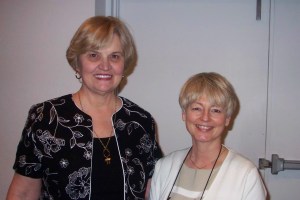
- Jewel Grewe (left) and myself at the conference in Spring Hill, Florida.

Archaeology
In what ways have the discoveries of archaeology verified the reliability of the Bible?
Over the years there have been many criticisms leveled against the Bible concerning its historical reliability. These criticisms are usually based on a lack of evidence from outside sources to confirm the Biblical record. Since the Bible is a religious book, many scholars take the position that it is biased and cannot be trusted unless we have corroborating evidence from extra-Biblical sources. In other words, the Bible is guilty until proven innocent, and a lack of outside evidence places the Biblical account in doubt.
This standard is far different from that applied to other ancient documents, even though many, if not most, have a religious element. They are considered to be accurate, unless there is evidence to show that they are not. Although it is not possible to verify every incident in the Bible, the discoveries of archaeology since the mid-1800s have demonstrated the reliability and plausibility of the Bible narrative.
Here are some examples:

- The discovery of the Ebla archive in northern Syria in the 1970s has shown the Biblical writings concerning the Patriarchs to be viable. Documents written on clay tablets from around 2300 B.C. demonstrate that personal and place names in the Patriarchal accounts are genuine. The name “Canaan” was in use in Ebla, a name critics once said was not used at that time and was used incorrectly in the early chapters of the Bible. The word tehom (“the deep”) in Genesis 1:2 was said to be a late word demonstrating the late writing of the creation story. “Tehom” was part of the vocabulary at Ebla, in use some 800 years before Moses. Ancient customs reflected in the stories of the Patriarchs have also been found in clay tablets from Nuzi and Mari.
- The Hittites were once thought to be a Biblical legend, until their capital and records were discovered at Bogazkoy, Turkey.
- Many thought the Biblical references to Solomon’s wealth were greatly exaggerated. Recovered records from the past show that wealth in antiquity was concentrated with the king and Solomon’s prosperity was entirely feasible.
- It was once claimed there was no Assyrian king named Sargon as recorded in Isaiah 20:1, because this name was not known in any other record. Then, Sargon’s palace was discovered in Khorsabad, Iraq. The very event mentioned in Isaiah 20, his capture of Ashdod, was recorded on the palace walls. What is more, fragments of a stela memorializing the victory were found at Ashdod itself.
- Another king who was in doubt was Belshazzar, king of Babylon, named in Daniel 5. The last king of Babylon was Nabonidus according to recorded history. Tablets were found showing that Belshazzar was Nabonidus’ son who served as coregent in Babylon. Thus, Belshazzar could offer to make Daniel “third highest ruler in the kingdom” (Dan. 5:16) for reading the handwriting on the wall, the highest available position. Here we see the “eye-witness” nature of the Biblical record, as is so often brought out by the discoveries of archaeology.
http://www.christiananswers.net/q-abr/abr-a008.html
Manuscript evidence for superior
New Testament reliability
The New Testament is constantly under attack and its reliability and accuracy are often contested by critics. But, if the critics want to disregard the New Testament, then they must also disregard other ancient writings by Plato, Aristotle, and Homer. This is because the New Testament documents are better preserved and more numerous than any other ancient writing. Because the copies are so numerous, they can be cross checked for accuracy. This process has determined that the biblical documents are extremely consistent and accurate.
There are presently 5,686 Greek manuscripts in existence today for the New Testament.1 If we were to compare the number of New Testament manuscripts to other ancient writings, we find that the New Testament manuscripts far outweigh the others in quantity.
| Author2 | Date Written |
Earliest Copy | Approximate Time Span between original & copy |
Number of Copies |
Accuracy of Copies |
| Lucretius | died 55 or 53 B.C. | 1100 yrs | 2 | —- | |
| Pliny | 61-113 A.D. | 850 A.D. | 750 yrs | 7 | —- |
| Plato | 427-347 B.C. | 900 A.D. | 1200 yrs | 7 | —- |
| Demosthenes | 4th Cent. B.C. | 1100 A.D. | 800 yrs | 8 | —- |
| Herodotus | 480-425 B.C. | 900 A.D. | 1300 yrs | 8 | —- |
| Suetonius | 75-160 A.D. | 950 A.D. | 800 yrs | 8 | —- |
| Thucydides | 460-400 B.C. | 900 A.D. | 1300 yrs | 8 | —- |
| Euripides | 480-406 B.C. | 1100 A.D. | 1300 yrs | 9 | —- |
| Aristophanes | 450-385 B.C. | 900 A.D. | 1200 | 10 | —- |
| Caesar | 100-44 B.C. | 900 A.D. | 1000 | 10 | —- |
| Livy | 59 BC-AD 17 | —- | ??? | 20 | —- |
| Tacitus | circa 100 A.D. | 1100 A.D. | 1000 yrs | 20 | —- |
| Aristotle | 384-322 B.C. | 1100 A.D. | 1400 | 49 | —- |
| Sophocles | 496-406 B.C. | 1000 A.D. | 1400 yrs | 193 | —- |
| Homer (Iliad) | 900 B.C. | 400 B.C. | 500 yrs | 643 | 95% |
| New Testament |
1st Cent. A.D. (50-100 A.D. | 2nd Cent. A.D. (c. 130 A.D. f.) |
less than 100 years | 5600 | 99.5% |
NUMBERS OF COPIES
2, 7, 7, 8, 8, 8, 8, 9, 10, 10, 20, 20, 49, 193, 643, 5600
ACCURACY OF COPIES
Homer 95%
New Testament 99.5%
As you can see, there are thousands more New Testament Greek manuscripts than any other ancient writing. The internal consistency of the New Testament documents is about 99.5% textually pure. That is an amazing accuracy. In addition there are over 19,000 copies in the Syriac, Latin, Coptic, and Aramaic languages. The total supporting New Testament manuscript base is over 24,000.
Almost all biblical scholars agree that the New Testament documents were all written before the close of the first century. If Jesus was crucified in 30 A.D., then that means that the entire New Testament was completed within 70 years. This is important because it means there were plenty of people around when the New Testament documents were penned who could have contested the writings. In other words, those who wrote the documents knew that if they were inaccurate, plenty of people would have pointed it out. But, we have absolutely no ancient documents contemporary with the first century that contest the New Testament texts.
Furthermore, another important aspect of this discussion is the fact that we have a fragment of the gospel of John that dates back to around 29 years from the original writing. This is extremely close to the original writing date. This is simply unheard of in any other ancient writing and it demonstrates that the Gospel of John is a first century document.
Below is a chart with some of the oldest extant New Testament manuscripts compared to when they were originally penned. Compare these time spans with the next closest which is Homer’s Iliad where the closest copy from the original is 500 years later. Undoubtedly, that period of time allows for more textual corruption in its transmission. How much less so for the New Testament documents?
| Important Manuscript Papyri |
Contents |
Date |
MSS Date |
Approx. Time Span |
|
| p52 (John Rylands Fragment)3 |
John 18:31-33,37-38 | circa 96 A.D. |
circa 125 A.D. |
29 yrs | |
| P46 (Chester Beatty Papyrus) |
Rom. 5:17–6:3,5-14; 8:15-25, 27-35, 37–9:32; 10:1-11, 22, 24-33, 35–14:8,9–15:9, 11-33; 16:1-23, 25-27; Heb.; 1 & 2 Cor., Eph., Gal., Phil., Col.; 1 Thess. 1:1,9-10; 2:1-3; 5:5-9, 23-28 | 50’s-70’s | circa 200 A.D. |
Approx. 150 yrs |
|
| P66 (Bodmer Papyrus) |
John 1:1–6:11,35–14:26; fragment of 14:29-21:9 |
70’s |
circa 200 A.D. |
Approx. 130 yrs |
|
| P67 | Matt. 3:9,15; 5:20-22, 25-28 | circa 200 A.D. |
Approx. 130 yrs |
If the critics of the Bible dismiss the New Testament as reliable information, then they must also dismiss the reliability of the writings of Plato, Aristotle, Caesar, Homer, and the other authors mentioned in the chart at the beginning of the paper. On the other hand, if the critics acknowledge the historicity and writings of those other individuals, then they must also retain the historicity and writings of the New Testament authors; after all, the evidence for the New Testament’s reliability is far greater than the others. The Christian has substantially superior criteria for affirming the New Testament documents than he does for any other ancient writing. It is good evidence on which to base the trust in the reliability of the New Testament.
http://www.carm.org/evidence/textualevidence.htm
Illustration of Bible text manuscript tree
and variant readings
The following diagram illustrates manuscript corruptions in the biblical texts that are produced, for whatever reason, and copied down to later manuscripts. The purpose of the illustration is to show how errors are copied down from one manuscript to another, how they are counted, and how we can determine which is the correct reading.
In this example, of the 26 existing manuscripts (represented by solid black and red sheets) nine of them have a textual problem where a phrase was incorrectly copied. Therefore, in this illustration, we would have a total of nine variants in 26 manuscripts. But, it is really only one.
However, manuscripts can be categorized in family trees by analyzing their location of discovery, jars found in, type of papyri written on, type of ink used, style of writing, etc. Therefore, daughter manuscripts can be matched very accurately to father manuscripts.
In this example we see that the word “only” was omitted from a 3rd century document and copied in subsequent, daughter documents. All we need to do is to take a look at the manuscripts and even though we see nine variants here, actually we can tell that there is only one which has been copied. Also, we can accurately determine which is the correct reading by looking at the father document from the 2nd century.
With this type of method, the New Testament documents can be reconstructed with an incredible accuracy. Furthermore, the New Testament is approximately 99.5% textually pure. This means that of all the manuscripts in existence they agree completely 99.5% of the time. Of the variants that occur, mostly are easily explainable and very few have any effect on the meaning of passages. In all, no New Testament doctrine is affected by any variant reading.

http://www.carm.org/index.html
What archaeological discovery has had the all-time greatest Biblical impact?
“Probably the Dead Sea Scrolls have had the greatest Biblical impact. They have provided Old Testament manuscripts approximately 1,000 years older than our previous oldest manuscript. The Dead Sea Scrolls have demonstrated that the Old Testament was accurately transmitted during this interval. In addition, they provide a wealth of information on the times leading up to, and during, the life of Christ.
—Dr. Bryant Wood, archaeologist, Associates
What is the importance of the Dead Sea Scrolls?
One of the most important contributions of the Dead Sea Scrolls is the numerous Biblical manuscripts which have been discovered. Until those discoveries at Qumran, the oldest manuscripts of the Hebrew Scriptures were copies from the 9th and 10th centuries AD by a group of Jewish scribes called the Massoretes. Now we have manuscripts around a thousand years older than those. The amazing truth is that these manuscripts are almost identical! Here is a strong example of the tender care which the Jewish scribes down through the centuries took in an effort to accurately copy the sacred Scriptures. We can have confidence that our Old Testament Scriptures faithfully represent the words given to Moses, David and the prophets.

Cave 4 at Qumran where approximately 15,000 fragments from some 574 manuscripts were found.
These articles contain compelling evidence of the truth of the scriptures and that we can truly rely the books of the Bible. Many just don’t know that the evidence is out there.
I have a book from Josh McDowell called “More Than A Carpenter.” I read this little book from the lending library in a resort in Mexico. I wanted this book and found it on-line and ordered the evangelization packet of 8 books.
On page 55 he says:
“After personally trying to shatter the historicity and validity of the Scriptures, I have been forced to conclude that they are historically trustworthy. If one discards the Bible as unreliable historically, then he or she must discard all the literature of antiquity. No other document has as much evidence to confirm its reliability.
A book that every Christian shoul have in their library is Josh McDowell’s “Evidence That Demands A Verdict.”
The forward says:
Thus, it is the Christian who will derive the greatest benefit from reading “Evidence That Demands A Verdict.” It will not only strengthen his own faith in Christ, but it will also provide evidence that will enable him to share his faith more effectively with others.

The goal of Bible study is to meet God daily through the study of his Word. First I pray that the Lord will illuminate the Word of God to my mind and my heart and then I pray for understanding.
There are many ways to study the Bible and here are some suggestions.
1. Read through the entire Bible. This is highly recommended. At a discernment conference I attended we were told to read through the Bible and when we were done, start over again.
2. Read an entire book. Look through the book first noting the subjects. Take notes and write down any applications you may find that apply in your life. Commentaries are great. You may want to read this AFTER your initial reading. God may want to show to something and when we read commentaries first this may obscure what the Lord wants to show us personally.
3. Concentrate on a passage. This is great for understanding of scripture but you should see how this passage fits in with the rest of the book or chapter you are reading. Many poor interpretations come from taking a single verse and using it out of context diminishing its proper meaning.
What is the content and facts of this passage? Who? When? Where? Why? What is the truth that is being conveyed in this passage? Is it a warning, or are we being commanded to do something? Does God give a promise or an encouragement in this passage? What are the parallel passages?
The parallel passages are important because scripture interprets scripture.
What are the specifics in this passage that we can pray about?
4. The Attributes of God. Go through a part of the Bible and look for attributes that describes the nature of God. Here is a sampling:
Light
Shepherd
Reconciler
Voice
Holy
Wise
Judge
Eternal
Truth
Love
Joy
Creator
Comforter
Forgiver
It is through these attributes that we begin to understand the character of God.
Lets look at Psalms 119: 114-117. I was looking at verse 114 specifically but noticed the many attributes in this passage.
“You are my refuge and my shield; I have put my hope in your word. Away from me you evildoers, that I may keep the commands of my God! Sustain me according to your promise, and I will live.”
Refuge
Shield
Hope
Word
Sustainer
Law
Promise
Life
Just look at the fountain of information is this single passage. There is a wealth of attributes about God that you can consider and thank Him for.
5. Word Study. Perhaps you want to study faith, perseverance, hope or fear. Whatever it is you want to concentrate on, you might start by looking up the word in a Bible dictionary. Look in your concordance or invest in a topical Bible. There are great websites that allow you to pull up every verse that has the word “holy” in it. Compare all of the verses asking: Who? What? Where? When? How? What can I apply what I have learned to my own life?
The applications of Bible study to our life is where the meat is. What is it that you learned that you can apply to your daily life? What specific action can you take? If you decide you want to spend more time in study, you may want to be specific by setting aside a certain time each day from 7:00 – 7:30 to pray and read God’s Word. Taking specific action is helpful to accomplish this goal.
You may want to apply something you learned to your work, (honesty on a time card), co-workers, ( being kind to someone who dislikes you), or maybe in your personal life, ( waiting on God’s time not your own.) Well, you get the picture. We need to apply the truths we find God’s Word to our everyday lives.
I often sit on my sofa, pillow on lap, with my Bible resting on it. I have 3 translations all handy. KJV, NIV, and a NRSV. Of course there is the computer for on-line versions of the Bible, commentaries and Greek/Hebrew concordances. I use http://www.blueletterbible.org but there are many others.
Many times I am filled with awe and love that God’s precious word is right before me. I am sitting at the foot of my Lord clinging to His feet and worshiping Him and His Word. Last week before writing this I felt like Mary who sat at the feet of the Lord when Martha was busying herself with chores. This is what I sense with Bible in hand. Communion with the Lord. I run my hand over the onion-skin paper and enjoy the crinkle of the pages. Such a sweet sound.
It is here that I find God. It is here Jesus Christ, God’s son lives for me. It is here the Holy Spirit illuminates the words that convict, instruct and compel me to live only for Jesus Christ, my Lord and Savior.
If a follow someone’s dream…I may be following another. If I hear another voice….I may be led to the wrong conclusion. If I follow another persons vision….I follow illusion which quickly turns into disillusion. That is why God’s voice is the written word.
We must use the Word of God as a measuring rod against all of man’s wisdom, thought, and actions. If it doesn’t line up with scripture it must be discarded. The Bible is the great discerner. It is the Truth, and so it is rejected by most of the unbelieving world.
But to those who love the truth it contains joy, salvation and guidance for living for the Lord Jesus Christ.
Homiletics.
What is homiletics?
Homiletics is a study system often used by pastors to extract key information from a passage. This is done by analyzing the passage for key phrases and condensing it to determine its basic content. Once you have the key words or phrases try to summarize the entire passage into a single composed sentence.
Next write down lessons or truths that can be learned from the passage. It is amazing how many truths can be lifted from a single passage when you really begin to study and contemplate it. Pray before you start that God will open your heart and mind to receive his Word.
Once the key truths are realized then you can start to expand the passage back out with applications that you can use in your life. Think of situations where you can actually apply the truth. How can your behavior be changed to glorify God?
Here is an example using homiletics from Matthew.
First read Matthew 17: 1-13 —-The Transfiguration
Where is it? High on the mountain.
Who is it? God – Jesus – Peter – James – John – Moses – Elijah
Key words in each verse.
1. Jesus 3 disciples mountain
2. Jesus transfigured bright light
3. Moses Elijah Jesus talking
4. Peter build shelters?
5. Voice Son Love Pleased Listen
6. Disciples Terrified
7. Do not be afraid
8. Saw only Jesus
9. Don’t tell raised
10. Why Elijah first?
11. Elijah will restore
12. Elijah & Son suffer
13. Elijah/John the Baptist
The Sentence summarizing the passage.
Matthew records that Jesus is transformed showing the disciples His true glory.
The Lessons
1. Jesus is the light
2. Jesus will reveal himself to you.
3. Jesus knew the OT prophets.
4. Jesus is truly God.
5. God the Father made it clear his Son is Jesus.
6. We are to listen what Jesus says.
7. Even though we love God we are to also fear him.
8. Do not be afraid of what God reveals to you.
9. Do not be afraid to tell others about Jesus Christ.
10. Jesus would be rejected like John the Baptist.
Possible Applications – I Will’s
I will get to know Jesus by reading His Word, listening to sermons, or fellowship with others. I know that Jesus will reveal Himself to me as I follow Him.
I will be confident explaining to others that Jesus is truly the Son of God, since these word came from the Father Himself.
I will listen to what Jesus tells me.
I will boldly tell others about Jesus because I was told not to be afraid.
I will expect that the very presence of God would cause fear and trembling.
I will go into the valleys to serve as I descend from the spiritual highpoints.
I will ask God what truth He wants me to know so that I can share with others.
***********
I want to tell you that this was one of the homiletic lessons that I prepared last year for my students. Some see other truths that I did not see so I wanted you to know that this is only an example. The students are to do the above procedure on their own worksheet. At the end of the year there were students who could pick out the content words on their worksheet, write a sentence, find at least one lesson and application and more during discussion, in the 30 minutes we were allowed for this part of the evening. The age group I taught last year were 10-11 year olds. To watch what God has done in these children who seek the Lord is nothing short of amazing. It is totally a blessing and filling of the Holy Spirit.
**********
My personal summary of Matthew 17:1-13
The transfiguration revealed to the disciples the Glory of God and of Jesus Christ. It looked to the past and it looked to the future. Jesus left the glory of heaven to come to earth as man and then to return after His work on the cross to His resurrected glory. He now abides at the right hand of the Father till He returns and someday we will witness Jesus in all His glory just as the disciples saw Him that night.
The transfiguration gave the disciples a witness account of what he actually and truly looks like. What a gift this was for the disciples who at Pentecost would remember His glory so they would profess to the world as eyewitnesses, the significance of His majesty.
Peter had earlier proclaimed Jesus as the Messiah and he did so without seeing anything like the splendor that had been later revealed to him, and John and James. But once they believed by faith they were given a spectacular view of His glory. He revealed Himself to His servants, and they saw His radiant face and garments, Moses and Elijah and heard the voice of God.
A cloud enveloped them and the voice said, “This is my Son, whom I love; with him I am well pleased. Listen to him!”
What a wonderful confirmation of who Jesus truly is. God Himself assured the disciples and us, that Jesus is truly the Son of God.
The disciples fell face down into the ground in terror. (What does this tell us today about those who say they communicate directly with God?) However, Jesus told them not to be afraid, and when they looked up Jesus was alone. How could they ever look at Jesus the same way again? What awe this must have created. And to see Moses and Elijah. What an unspeakable honor to see the Old Testament prophets. Oh, to hear what they spoke of. We are told very little in Luke about their conversation.
They asked Jesus, “Why do the teachers of the law say that Elijah must come first? Jesus explained that Elijah did come as John the Baptist to prepare the way for Him, but he was killed just as Jesus would also be killed.
They then went down from the mountain and back into the world. After this spiritual high point they were to move on and were immediately met by a needy person. What a lesson in itself right here, that after a glorious experience, one is expected to help another.
How many people are continually seeking spiritual mountaintops? Meeting after meeting, conferences, seminars, always seeking signs and wonders, desiring only the high points, never serving.
There are times when all I want to do is sit in my little room and think about God’s glory. But I know that this is not what I have been trained to do. I can only serve God by coming down off the mountaintop and into the valleys to serve. But one of things I take away from this passage is the commandment to listen and to obey Jesus. His commandments are laid out in the Word of God. When I have a spiritual highpoint in my life now I take it as an encouragement to go forth and serve God. It is not something to bask in like we see so much of today. We are not to be afraid to do what He asks of us. He showed His glory to the disciples so that they would go out and preach the Gospel.
We can apply what we have learned here by listening to God’s voice in the Bible. We can boldly go forth and tell others because God has revealed himself to us through his Word. Doing so will please God.
Luke adds that Jesus was praying after ascending the mountain. Jesus prayed at all the important steps in His life and this time was no exception. This is a reminder that when we are facing an important decision or step in our life, we need to go the Father in prayer.
Peter later wrote:
“We were eyewitnesses of his majesty. For he received honor and glory from God the Father when the voice came to him from heaven when we were with him on the sacred mountain”
2 Peter 1:16-18
What an affirmation for the disciples who actually heard the voice of God and saw the Shekinah glory. What a confirmation to them that Jesus not only knew Moses and Elijah, but that He was fulfilling their teachings. What a glorious vision to recall as they went out after Pentecost knowing what Jesus truly looked like in all his glory as He sits at the right hand of the Father.
Bible study is your personal time spent with God. Pray first for understanding from the Holy Spirit and let the Spirit guide you into the Truth.
Submitted by Craig “Lee” Dorsheimer:
My Statement of Faith
For the past six to eight weeks or so I’ve been working on a personal statement of faith. My intent is to be as complete as possible in outlining my beliefs using scriptural backup without rewriting the entire Bible! I welcome any input or criticism provided you can backup your view with chapter and verse in context. You may just help me in refining it further. This was an enriching exercise for me; and, I encourage everyone to write their own. You may borrow parts of this or even copy this outright. In my quest to write this I consulted quite a few statements of faith on various websites; and, I’ve borrowed some of their words. Here it is:
Jehovah God is one God in three persons (Elohim) [Genesis 1:1-2,26; John 1:1-2,14] known as the Holy Trinity: God the Father, Jesus Christ His one and only begotten Son [John 3:16], and the Holy Spirit. God is omnipresent, omnipotent, omniscient and sovereign. Jesus Christ was born of a virgin and conceived by the Holy Spirit [Luke 1:26-35; Matthew 1:18] fully God and fully man [John 5:18; Philippians 2:6-7].
Salvation into eternal life is only through Jesus Christ [John 14:6] as a result of His death, burial and resurrection on the 3rd day [Philippians 2:8; Matthew 28:1-7; Luke 24:1-10,46] thereby defeating Satan [Genesis 3:15; Philippians 2:9-11] and atoning for our sins [John 3:16; Romans 5:8, 10:9]. Christ has now ascended to be at the right hand of the Father [Acts 2:33] serving as our mediator [Galatians 3:19-20; 1 Timothy 2:3-6]. Salvation is a free gift of unmerited grace through faith in Jesus Christ [Ephesians 2:8-9]. Jesus’ death also fulfilled the Law of Moses [Matthew 5:17]; consequently, Christians are free from this bondage [Galatians 3:10-25].
If we believe the aforementioned and acknowledge the fact that we are sinners in need of a savior [Romans 3:23, 5:12, 6:23], repent of our sins [Luke 13:5; Matthew 3:2], and accept Jesus Christ as our personal Lord and Savior we will gain eternal life [Romans 10:9,13]. At the point of salvation the Holy Spirit indwells each and every believer [Romans 5:1-2,5] identifying each one as a Christian who becomes a new creature [2 Corinthians 5:17]. Christians are a Royal Priesthood [1 Peter 2:9] with the confidence to enter the Most Holy Place [Mark 15:37-38] to petition the Father by prayer [Hebrews 10:19-22] in the Name — i.e., in the character — of Jesus Christ His Son as revealed through His Word.
The Holy Spirit empowers all believers; and, His indwelling is a seal guaranteeing eternal life [2 Corinthians 1:21-22; Ephesians 1:13-14]. Evidence of the presence of the Holy Spirit is by the convicting of sin and guidance into all Truth [John 16:8-11,13]. He will bring glory to Jesus Christ [John 15:26, 16:14]. The Holy Spirit gives believers spiritual gifts disbursed just as He determines [1 Corinthians 12:7-11; Romans 12:4-8] and intercedes on our behalf [Romans 8:26].
Jesus Christ is the Word made flesh [John 1:1-2,14]. The Holy Bible in its original languages is the Holy Spirit-inspired, inerrant, and infallible Word of God [Proverbs 30:5; 2 Peter 1:20-21] complete unto itself. The Bible will never be superseded or supplemented by any other teaching [Proverbs 30:6] and nothing should be subtracted from it [Deuteronomy 4:2; Matthew 5:17; Revelation 22:18-19]. Its full counsel provides the way to live a complete Christian life [2 Timothy 3:16-17].
All Christians should have a part in the Great Commission making disciples of all nations, teaching them to obey the teachings contained in His Word [Matthew 28:19-20; Luke 24:47].
Jesus Christ will return again [Matthew 24:30; 1 Thessalonians 4:16] and gather all Christians, first the dead then the living [1 Corinthians 15:51-54; 1 Thessalonians 4:15-17]. Unbelievers will be separated from God and will forever dwell in Hell (Gehenna) [Matthew 13:41-42], while believers will be in God’s presence in Heaven [Matthew 13:43; Daniel 12:3] for all eternity [John 3:15-16, 4:14, 5:24, 6:40, 10:28, 17:2].
Are we suffering for Jesus Christ?
So many people ask “Why do Christian’s suffer?”
I am afraid I have to ask instead, “Why are Christians NOT suffering for the Lord Jesus Christ these days?”
It seems as though we are seeing times of great reversal of thought. For instance, false teachings in the church of today are saying that if we give 100 fold we will receive back, 300 fold, 600 fold, 1000 fold, etc. While it is true that the Christian will receive blessings, and it is not wrong to want the rewards, it is not to be our focus. The Bible tells us we will suffer for Christ, but this makes us uncomfortable so we delight instead of being told of the riches we receive when we give to ministries.
With the attitude of “What’s in it for me?” the gospel perishes. This is the ugly result of Word of Faith and prosperity teachings.
While studying Genesis, I found the story of Joseph truly astounding. There is so much information about how we are live our own lives by Joseph’s example that it simply cannot be contained in this short article.
Joseph was hated by his brothers. He was chosen by God. They plotted against him and threw him into a pit to die, while they ate a meal. When a caravan approached, the brothers decided to sell him to the Ishmaelites so as not to spill his blood. They took revenge on their father Jacob and deceived him by staining the coat with blood of a goat. This is of course the famed coat which belonged to Jacob’s favorite son.
Joseph must have felt led by God after receiving his two dreams. What excitement he must have experienced, anticipating his service to God, only to be sold into slavery in which he suffered for 13 years. He was a servant in Potiphar’s house, only to be accused wrongly by his master’s wife. He then was imprisoned and thrown on the floor in chains. It was not until the Pharaoh summoned Joseph because he could interpret dreams, that he was removed from prison. Later he was elevated to the highest court in Egypt. He was 30 years old at this time.
So what did Joseph do to deserve the extreme suffering that was inflicted upon him? Nothing! There is no evidence that Joseph deserved such treatment from family and foes. He walked with the Lord and was obedient to God’s will.
Search the scriptures in Genesis 39-40 for the complaints put forth by Joseph for his unjust treatment and you will find nothing. Look at his amazing qualities and actions while he suffered and you will discover a model of what constitutes a great leader of God.
Search for the ways that Joseph was trained through his suffering. He always waited on God and learned faith through his difficulties. What trust and fellowship he had. There is no way Joseph would have understood why he was being put through these hardships. Yet there was no hatred, bitterness, doubt, or worry. Joseph’s faith puts my faith to shame. No matter what situation he was in, he endured, he was faithful, and he was determined to be the best slave he could be. The Lord trained Joseph for service in this manner.
How can you look at Joseph and apply his great faith and trust in the Lord to your everyday situations? Are you grousing and complaining about your circumstances? Is the Lord testing you? Are you being prepared for a future work? Is the Lord refining you? If you have never trusted the Lord in your difficulties how can you aid your brothers and sisters in Christ?
Times of trouble can strengthen us if we call upon the name of Lord. The problem with false teachings today is that we call upon the Glory of the Lord upon us and just “soak” in ecstasy. This is a deception of the enemy. The self-elevating process seems ridiculous when looking back at Joseph and examining his faith and actions in his life while he was suffering. What we can learn from the example set forth by Joseph, is how the Lord trained him to serve others. Joseph was eventually exalted. Was he proud? Did he pump his fists in victory? Did he hold his position over his brothers? No.
There was no self-exultation in this godly leader. No self-promotion. He did not touch God’s glory. There are few leaders who can shun the pride of success and fame. This pride is so evident today.
So why do Christians suffer? As a Christian other people are watching you. What is your reaction going to be if you experience a economic downfall? A death in the family? Declining health? Will you be complaining and grumbling, or will you instead be praying for strength in the Lord to bear up under difficulty? What example are you setting for those in your family or unbelievers who are watching you?
Suffering can be a blessing. It gives the opportunity to witness of the grace of God and the hope that He gives in adversity. Are you prepared to witness to the goodness of God when your situation seems impossible? Will others see the love and joy in your heart even though your circumstances may appear glum and dreary? God has a plan that He will work out for His purposes, and we may never know in our lifetime what that purpose may be.
Paul is a prime example of many hardships. Beatings, shipwrecks, persecution, distresses, sleepless nights, imprisonment, loneliness, poverty, riots, and pain. He suffered much while preaching the cross of Jesus Christ. Yet he was not discouraged. He kept running the race. In the midst of such sorrows there was also much rejoicing.
This rejoicing and glory was balanced by Paul’s thorn in the flesh. He asked three times to have this thorn removed. But God did not remove it. He was told, “My grace is sufficient for you, for my power is made perfect in weakness.” (2 Corinthians 12:9a)
So Paul delighted in his weaknesses. (2 Corinthians 12:9b-10) “Therefore I will boast all the more gladly about my weaknesses, so that Christ’s power may rest on me. That is why, for Christ’s sake, I delight in weaknesses, in insults, in hardships, in persecutions, in difficulties. For when I am weak, then I am strong.”So how can we apply this to our own lives? We certainly have our share of sickness, trials and tribulations. The comfort God gives us will balance our afflictions and His grace will be sufficient. Of course, this is not what we are hearing from the pulpit. God’s grace is not enough so we are being sold the deception that healing and prosperity has been withheld from us because we lack faith. This destroys our walk with the Lord. How this cheers up Satan when we no longer rely on the sufficiency of God, and his abundance of grace. (2 Corinthians 8:9)
This lack of trust in the Word of God, stops the flow of comfort that we would give to others. (2 Corinthians 1:4) So we should rely on the eternal glory that outweighs all suffering.
“Therefore do not lose heart. Though outwardly we are wasting away, yet inwardly we are being renewed day by day. For our light and momentary troubles are achieving for us an eternal glory that far outweighs them all. So we fix our eyes not on what is seen, but on what is unseen, For what is seen is temporary, but what is unseen is eternal. (2 Corinthians 4:16-18.)
Paul is saying that the eternal glory will far exceed the sufferings of this present life, since we have the resurrection to look forward to. Not all suffering will bring glory though. Faith is required. That is why we are not to fix our eyes on the unseen. When faith is not enough we allow ourselves to stray into realms of the paranormal to satisfy our lack.
Both Joseph and Paul experienced God’s comfort in their trials. But God gives a supernatural comfort, joy and peace. Is this your experience, that every trial is abounding with consolation? Are you anticipating the glory that is promised to all believers at the return of Jesus Christ? Are you willing to suffer pain for His name? Are you willing to endure persecution for the declaration of the Gospel of Jesus Christ?
1 Peter 4:19
So then, those who suffer according to God’s will should commit themselves to their faithful Creator and continue to do good.
 DiscernIt
Recent Comments