
You are currently browsing the category archive for the ‘Bible Study’ category.
“..once God has brought him to poverty of spirit and he sees himself damned without Christ, let God propound what articles he will, he will readily subscribe to them: ‘Lord, what wilt thou have me to do?”
I have been studying and reflecting on the principles taught in the Sermon on the Mount. My first in-depth study occurred as I taught the book of Matthew in a Bible study program.
Next I read an excellent book by James Montgomery Boice, “Sermon on the Mount.” If you like commentary this is a great resource.
Now I have found the teachings of John MacArthur to also be life-changing. Here is an excerpt from “Happy are the Humble.”
If you apply the principles of the Sermon on the Mount you will be a different person. Many Christians in our day have lost their distinctiveness because they’ve allowed themselves to be molded by the world’s approach to music, sex, marriage, divorce, materialism, food, alcoholic beverages, dance, entertainment, sports, and other things. God wants us to live as a people distinct from the value systems of the world. It grieves God to see corruption among His people.
V. HOW CAN I KNOW IF I AM POOR IN SPIRIT?
Thomas Watson gives seven principles we may apply in determining whether we are poor in spirit (The Beatitudes [Edinburgh: Banner of Truth Trust, 1971], pp. 45-48).
A. You Will Be Weaned from Self
Psalm 131:2 says, “Like a child that is weaned of his mother; my soul is even like a weaned child.” A person who is poor in spirit will be weaned from his self- centeredness. All he thinks about is glorifying God and meeting the needs of others.
B. You Will Focus on Christ
When you are poor in spirit, you will focus on the wonder of Christ. Second Corinthians 3:18 implies that believers are focused on Christ, seeing in themselves a reflection of Him. Philip showed that kind of focus when he said, “Lord, show us the Father, and it sufficeth us” (John 14:8). The psalmist said, “I shall be satisfied, when I awake, with thy likeness” (Ps. 17:15).
C. You Will Never Complain
If you are poor in spirit you will never complain about your circumstances because you know you don’t deserve anything anyway. You have nothing to offer to God, yet the greater your needs the more abundantly He provides. So when you lack everything you are in the greatest position from which to receive and recognize God’s grace.
D. You Will See Good in Others
A person who is poor in spirit will see the excellencies of others and recognize his own weaknesses. A truly humble person looks up to everyone else.
E. You Will Spend Time in Prayer
A beggar is always begging. He knocks at heaven’s gate all the time and doesn’t stop until he is blessed.
F. You Will Take Christ on His Terms
The proud sinner adds Christ to his pleasures, covetousness, and immorality. One who is poor in spirit is so desperate that he will give up everything to obtain Christ. Thomas Watson said, “A castle that has long been besieged and is ready to be taken will deliver up on any terms to save their lives. He whose heart has been a garrison for the devil, and has held out long in opposition against Christ, when once God has brought him to poverty of spirit and he sees himself damned without Christ, let God propound what articles he will, he will readily subscribe to them: ‘Lord, what wilt thou have me to do?'” (p. 47).
G. You Will Praise and Thank God
When you are poor in spirit, you will praise and thank God for His grace in the knowledge that everything you have is a gift from Him. The apostle Paul displayed that attitude in 1 Timothy 1:14: “The grace of our Lord was exceedingly abundant.” Those who are poor in spirit are filled with thanks.
Access Grace to You by using this link:
http://www.gty.org/Resources/Study+Guides/40-5201_The-Beatitudes
Letter to a new convert
by Jonathan Edwards, 1741
My dear young friend,
As you desired me to send you, in writing, some directions how to conduct yourself in your Christian course, I would now answer your request. The sweet remembrance of the great things I have lately seen at your church, inclines me to do anything in my power, to contribute to the spiritual joy and prosperity of God’s people there.
1. I would advise you to keep up as great a earnestness in religion, as if you knew yourself to be in a state of nature, and were seeking conversion. We advise people under conviction, to be earnest and violent for the kingdom of heaven; but when they have attained to conversion, they ought not to be the less watchful, laborious, and earnest, in the whole work of religion, but the more so; for they are under infinitely greater obligations. For lack of this, many people, in a few months after their conversion, have begun to lose their sweet and lively sense of spiritual things, and to grow cold and dark, and have “pierced themselves through with many sorrows;’ whereas, if they had done as the apostle did, (Phil. 3:12-14.) their path would have been “as the shining light, which shines more and more unto the perfect day.”
2. Do not leave off seeking, striving, and praying for the very same things that we exhort unconverted people to strive for, and a degree of which you have had already in conversion. Pray that your eyes may be opened, that you may receive sight, that you may know yourself, and be brought to God’s footstool; and that you may see the glory of God and Christ, and may be raised from the dead, and have the love of Christ shed abroad in your heart. Those who have most of these things, have need still to pray for them; for there is so much blindness and hardness, pride and death remaining, that they still need to have that work of God wrought upon them, further to enlighten and enliven them, that shall be bringing them out of darkness into God’s marvelous light, and be a kind of new conversion and resurrection from the dead. There are very few requests that are proper for an impenitent man, that are not also, in some sense, proper for the godly.
3. When you hear a sermon, hear for yourself. Though what is spoken may be more especially directed to the unconverted, or to those that, in other respects, are in different circumstances from yourself; yet, let the chief intent of your mind be to consider, “In what respect is this applicable to me? and what improvement ought I to make of this, for my own soul’s good?”
4. Though God has forgiven and forgotten your past sins, yet do not forget them yourself: often remember, what a wretched bond-slave you were in the land of Egypt. Often bring to mind your particular acts of sin before conversion; as the blessed apostle Paul is often mentioning his old blaspheming, persecuting spirit, and his injuriousness to the renewed; humbling his heart, and acknowledging that he was “the least of the apostles,” and not worthy “to be called an apostle,” and the “least of all saints,” and the “chief of sinners;” and be often confessing your old sins to God, and let that text be often in your mind, (Ezekiel 16:63.) “that you may remember and be confounded, and never open your mouth any more, because of your shame, when I am pacified toward you for all that you has done, says the Lord God.”
5. Remember, that you have more cause, on some accounts, a thousand times, to lament and humble yourself for sins that have been committed since conversion, than before, because of the infinitely greater obligations that are upon you to live to God, and to look upon the faithfulness of Christ, in unchangeably continuing his loving-kindness, notwithstanding all your great unworthiness since your conversion.
6. Be always greatly abased for your remaining sin, and never think that you lie low enough for it; but yet be not discouraged or disheartened by it; for, though we are exceeding sinful, yet we have an Advocate with the Father, Jesus Christ the righteous; the preciousness of whose blood, the merit of whose righteousness, and the greatness of whose love and faithfulness, infinitely overtop the highest mountains of our sins.
7. When you engage in the duty of prayer, or come to the Lord’s supper, or attend any other duty of divine worship, come to Christ as Mary Magdalen1 did; (Luke 7:37, 38.) come, and cast yourself at his feet, and kiss them, and pour forth upon him the sweet perfumed ointment of divine love, out of a pure and broken heart, as she poured the precious ointment out of her pure broken alabaster box.
8. Remember, that pride is the worst viper that is in the heart, the greatest disturber of the soul’s peace, and of sweet communion with Christ: it was the first sin committed, and lies lowest in the foundation of Satan’s whole building, and is with the greatest difficulty rooted out, and is the most hidden, secret, and deceitful of all lusts, and often creeps insensibly into the midst of religion, even, sometimes, under the disguise of humility itself.
9. That you may pass a correct judgment concerning yourself, always look upon those as the best discoveries, and the best comforts, that have most of these two effects: those that make you least and lowest, and most like a child; and those that most engage and fix your heart, in a full and firm disposition to deny yourself for God, and to spend and be spent for him.
10. If at any time you fall into doubts about the state of your soul, in dark and dull frames of mind, it is proper to review your past experience; but do not consume too much time and strength in this way: rather apply yourself, with all your might, to a pledge pursuit after renewed experience, new light, and new lively acts of faith and love. One new discovery of the glory of Christ’s face, will do more toward scattering clouds of darkness in one minute, than examining old experience, by the best marks that can be given, through a whole year.
11. When the exercise of grace is low, and corruption prevails, and by that means fear prevails; do not desire to have fear cast out any other way, than by the reviving and prevailing of love in the heart: by this, fear will be effectually expelled, as darkness in a room vanishes away, when the pleasant beams of the sun are let into it.
12. When you counsel and warn others, do it earnestly, and affectionately, and thoroughly; and when you are speaking to your equals, let your warnings be intermixed with expressions of your sense of your own unworthiness, and of the sovereign grace that makes you differ.
13. If you would set up religious meetings of young women by yourselves, to be attended once in a while, besides the other meetings that you attend, I should think it would be very proper and profitable.
14. Under special difficulties, or when in great need of, or great longings after, any particular mercy, for yourself or others, set apart a day for secret prayer and fasting by yourself alone; and let the day be spent, not only in petitions for the mercies you desire, but in searching your heart, and in looking over your past life, and confessing your sins before God, not as is accustomed to be done in public prayer, but by a very particular rehearsal before God of the sins of your past life, from your childhood hitherto, before and after conversion, with the circumstances and aggravations attending them, and spreading all the abominations of your heart very particularly, and fully as possible, before him.
15. Do not let the adversaries of the cross have occasion to reproach religion on your account. How holily should the children of God, the redeemed and the beloved of the Son of God, behave themselves. Therefore, “walk as children of the light, and of the day,” and “adorn the doctrine of God your Savior;” and especially, abound in what are called the Christian virtues, and make you like the Lamb of God: be meek and lowly of heart, and full of pure, heavenly, and humble love to all; abound in deeds of love to others, and self-denial for others; and let there be in you a disposition to account others better than yourself.
16. In all your course, walk with God, and follow Christ, as a little, poor, helpless child, taking hold of Christ’s hand, keeping your eye on the marks of the wounds in his hands and side, whence came the blood that cleanses you from sin, and hiding your nakedness under the skirt of the white shining robes of his righteousness.
17. Pray much for the ministers and the church of God; especially, that he would carry on his glorious work which he has now begun, until the world shall be full of his glory.”
Particularly I would beg a special interest in your prayers and the prayers of your Christian companions, both when you are alone and when you are together, for your affectionate friend, who rejoices over you and desires to be your servant.
In Jesus Christ,
Jonathan Edwards
How to Change America
How to Change the World
An Editorial by Pastor Anton Bosch
Here is an excerpt from this article…It is excellent …Please read.
It is so easy to blame everyone else and to enumerate the nation’s and the church’s problems. But we often fail to recognize our personal problems and see that change has to begin with each one of us.
We want the Ten Commandments written in stone in the court house, but it is not written in our hearts. In fact, we can’t even recite them!
Full Article Link below

So, in the Calvinism vs. Arminianism debate, who is correct? It is interesting to note that in the diversity of the body of Christ, there are all sorts of mixtures of Calvinism and Arminianism. There are five-point Calvinists and five-point Arminians, and at the same time three-point Calvinists and two-point Arminians. Many believers arrive at some sort of mixture of the two views.
Ultimately, it is our view that both systems fail in that they attempt to explain the unexplainable. Human beings are incapable of fully grasping a concept such as this. Yes, God is absolutely sovereign and knows all. Yes, human beings are called to make a genuine decision to place faith in Christ unto salvation. These two facts seem contradictory to us, but in the mind of God they make perfect sense.
Full article HERE from..got Questions?
These charts record the number of earthquakes each year.
This chart is for Quake Magnitude 4+
Quake Magnitude 5+
Quake Magnitude 6+
Quake Magnitude 7+
Quake Magnitude 8+
As we can see from these graphs, there are increases in the more powerful earthquakes. And we are only in April of 2010.
source
dlindquist.com
WHY DOES GOD ALLOW SUFFERING?
March 31, 2010 (David Cloud)
Many wonder why God allows suffering and catastrophes.
To answer this we would say, first, that the trouble in this world is man’s fault, not God’s. When God made man in the beginning, there was no suffering. God made a perfect world for man to live in and provided for man’s every need. God placed the first man and woman in a paradise called the Garden of Eden and gave them only one commandment. But they were not satisfied with God’s provision and they disobeyed God’s commandment and fell into sin. As a result, the world became a place of evil and suffering. This is man’s fault. It is men that lie and cheat and steal and rape and kidnap and bully and kill.
Second, God is holy and judges sin. He is not only a Saviour, He is also a Judge. God warned the first man and woman, that if they disobeyed His law they would be punished, and that is what happened. Because of sin, the world came under God’s curse. This is described in Genesis chapter 3. It is God’s curse that is the cause of sickness and death and many other troubles that men suffer. Men are not innocent before God. All men have sinned and broken His laws; and all men, therefore, deserve to be punished.
Third, God has given light to men and they have rejected it. John 1:9 says that God gives light to every man. There is the light of creation (Romans 1:19-20). Men can know that there is a God from the things that He has made. There is also the light of conscience (Romans 2:14-16). God has put a conscience inside of man that tells us there is a God and that convicts us when we do wrong. There is also the light of the Bible (Romans 3:1-2). This is the greatest light that God has given to men.
From the very beginning, when men first sinned, God began to show them the way of salvation. But for the most part, God’s Word has been rejected and men have lived according to their own thinking and have traded the true and living God for false gods. Adam and Eve knew God and knew about His salvation (Genesis 3:15, 21). Adam lived 930 years (Genesis 5:5), so for the first millennium of man’s history the first man was still alive and still talking about the true God who had created him. Adam’s second son, Abel, was a prophet and knew about salvation through the coming Saviour (Luke 11:50-51; Hebrews 11:4). Before the worldwide Flood, there were prophets. Enoch was a prophet who preached about the second coming of Christ (Jude 14-15), and Noah also preached for 120 years before the Flood (2 Peter 2:5). Job lived after the Flood and knew many things about God, including salvation through the coming Saviour and the bodily resurrection (Job 19:25-27). Solomon proclaimed the true God to many nations in his day (1 Kings 4:34). This was 1,000 years before Christ. King Nebuchadnezzar of the Babylonian empire preached to the nations of his day (Daniel 4:1-3, 37). This was about 550 years before Christ. Darius of the Medo-Persian empire also preached to the nations (Daniel 6:25-28). The apostles preached the gospel in the Middle East, Asia, Africa, and Europe (Romans 1:8). From then until now Christian missionaries have been preaching to the ends of the earth. Men have no excuse for sitting in darkness and not knowing the true and living God.
Men are responsible to seek God (Acts 17:27). In the Parable of the Sower, Jesus taught that men are responsible to respond to God’s Word (Matthew 13:18-19, 23). Those who respond to the light are given more light. Cornelius is an example of this (Acts 10). He was seeking God and trying to follow the Old Testament, and God sent a Christian to him to explain the gospel of Jesus Christ. The same thing happened to the eunuch from Ethiopia. We read about this in Acts 8:26-40. He had visited Israel and obtained one of the books of the Old Testament and was trying to understand it. God sent Philip to him to explain the gospel.
God has been trying to speak to men and to call them for 6,000 years, but for the most part He has been ignored. God cannot be blamed for man’s spiritual ignorance.
Fourth, God has provided salvation and offers it to all men. God’s great love and goodness are evident by the fact that He came into this world and suffered many things at the hands of His own creatures and allowed Himself to be crucified on a cross in order to save men from their sins. “For God so loved the world, that he gave his only begotten Son, that whosoever believeth in him should not perish, but have everlasting life” (John 3:16). God wants to save men. That is His desire. If men are not saved, it is not God’s fault. The fact that God has gone to such great trouble and expense to provide salvation for those who believe is evidence that He can be trusted to do that which is right.
Fifth, we cannot expect to understand everything about God. To understand every mystery about God, you would have to be God! Though God has revealed many things to us in the Scriptures, He has not revealed everything and He has not answered every question we can ask. Deuteronomy 29:29 is a very important verse. “The secret things belong unto the LORD our God: but those things which are revealed belong unto us and to our children for ever, that we may do all the words of this law.”
Sixth, God does not have to answer to man. “Nay but, O man, who art thou that repliest against God? Shall the thing formed say to him that formed it, Why hast thou made me thus?” (Romans 9:20). As God’s creature, man is required to trust and obey him regardless of whether he can understand him. God must be God.
As a childrens’ Bible teacher in BSF I can usually tell the children who are home-schooled and are not allowed to watch TV. They usually always have their lessons done and seem to be quite a bit more articulate. Here are some excellent excerpts from David Clouds site, Way of Life.
By David Cloud
FAMILIES THAT HAVE GIVEN UP TELEVISION
The following is taken from “Keeping the Kids,” which has just been released.
Following are some of the testimonies that were sent to me recently by Christian parents who have gotten rid of the television. I requested these in the context of a new book I am writing entitled “Keeping the Kids.” These testimonies are extensive and there is some repetition, but I believe that it is important to publish them in order to offset the status quo that exists even in most allegedly staunch Bible-believing churches today.
“Sick of the nasty language, barely dressed women and/or men, sexual content, drugs, drinking, murder, the commercials, the list goes on, we have not had cable/antenna hook up for about six years in our home and we LOVE IT! The result has been wonderful! We are no longer couch potatoes. We enjoy the quietness in the home. We enjoy each other’s company. We enjoy more time spent with Father God. We spend more time in prayer, reading God’s Word and being with the each other. We do more out of doors activities–walking trails, driving to the mountains, etc.”
“Being engulfed in front of a TV has nothing to do with family time. Real family time is getting closer to God and developing an intimate, passionate, and personal relationship with Jesus!”
“We were compulsive TV watchers. Enslaved is actually the word, so I had to eliminate it. Now we have a lot of time for the family. We do Bible study after dinner every day and play games with the kids. My wife and I have more personal time.”
“We gave up the television because of the wickedness of it and its effect on our lives and the kids. I can’t stand hearing God’s name being blasphemed! The kids are a LOT more obedient and listen to instruction. Reading has been the main replacement activity.”“We have four children from ages 16 to 8. We do not watch commercial television with the exception of occasional news and weather. Our children are not allowed to watch TV unsupervised. There are no TVs in the bedrooms. We found that even good educational shows had offensive commercials. Even most educational shows have a strong humanistic, evolutionistic, and anti-Christian bias.”“God spoke softly to our hearts. We just started feeling very uncomfortable when we were watching TV. My husband said that it’s time to get rid of it. It was not a slow process of just eliminating a few programs; we just threw the TV out. … It is a real tool of Satan to subtly get your mind off of Jesus. I mean when you’re watching Die Hard, or any other show for that matter, are you really thinking on things that are pure, just, holy, peaceable, etc. like the Bible commands us to do? We need to obey the whole Bible not just parts of it. Do you think Jesus and the Holy Spirit are sitting down with you as you watch TV hours on end? God has a higher calling for us. Just read James 1:27. Most people forgot that second half of that verse, ‘Keep yourself unspotted from the world.’”
“We have chosen not to watch television because of the ungodly influences. Scripture is very clear that we are not to learn the way of the heathen and that we are to be simple concerning that which is evil. We don’t feel justified in wading through the filth to enjoy a few decent programs. Some folks say they can control it, but we don’t believe that is possible. It ends up controlling those who watch it and they become desensitized to the wickedness that is on it. We also believe that TV viewing is a great waste of time, that it hinders creativity and results in a short attention span. How can we ask for the Lord’s blessing on our home while pumping the filth of this world into our living room? How can we expect our children to be spiritually minded and to have a heart for God and revival while having a steady diet of ‘garbage’ from TV?”
By Kim Olsen
Am I in God’s will? Am I doing the right thing? Lord, what job shall I take? Does God even hear me? How can I hear from God to get the answers I need?
Common questions. I hear them all the time and have asked the very same questions over and over again. It is human nature to want to know the future. What a comfort it would be to know everything on a day to day basis. Or would it?
In the Old Testament, the Israelites followed the cloud, the Lord, in the desert. Now here they knew that they were following God. In fact they were led for every moment. But picture this scenario…..
A family is settled in because the cloud has stopped moving. They unpack. Set up the tent. Make a fire pit. Put away all their belongings. But wait….the cloud has started moving again….hey, everybody….start packing. Let’s go..go! What questions might the Israelites had asked….
Where are we going? How long will we travel before we stop again? Why do we stay in one location for three days then the next for three months? Will we stop somewhere that has shade? When we do stop, how long will we stay at that destination? Where will our water come from? Should I continue to follow this cloud that does not seem to be taking us anywhere? Where is this promised land? How long till we get there? I see the cloud but is God really in it? Where is Moses when you need him?
It is not indicated in scripture that the Israelites were given any answers to these questions. They were to just follow the cloud when it moved.
At Bible study we were asked, “Is this really how you want to be led by God?”. It gives us pause to remember the freedom we have in Christ. Even though the Israelites were visibly directed by God, they rebelled and complained saying more than once that they thought they were better off back in Egypt. Did they forget that they were slaves there? In fact they wanted to replace Moses. “Let us make a captain, and let us return to Egypt.” Numbers 14:3. So, it seems that even those directly led by God, rebel.
We were given a mind to make our own decisions. In fact when we look at scripture there is no indication that the general believing population, after reaching Canaan, was given any special direction at all. They just served the Lord in everyday situations, just like we are to today.
Sure, it would be nice to know if we should take a certain job or move to a new city, but we are not entitled to any special revelation from God. He may give us a peace about a decision, check our spirit, or provide providentially, but we are to be wise and make the best decisions possible based on how we are to live our lives based on scripture.
Once we begin to seek hidden knowledge, or wait for a voice boom from above, we get ourselves into trouble of waiting on extra-biblical aid. I do believe there are times when God intervenes supernaturally. Yes, indeed I do. And I also believe that God can and will lead with that small still voice. But this is not the normal way God speaks daily to us or works in our lives. He speaks to us through His written Word.
So, how do you know God and His will? Genesis to Revelation. There is no easy answer here but one has to start walking with Jesus because He is the Word. He is the Way.
If you are truly hungering for God, then you will hunger for the Word because it is through study and prayer that God will reveal Himself to you. I wish there were shortcuts, but it just isn’t so.
1 John 5:3 says “This is love for God: to obey his commands. And his commands are not burdensome,”
To know God is to study His Word. Set aside time each day to read scripture. After you pray, open your Bible and ask the Holy Spirit to lead and guide you in all His ways.
We know from John 1:1 that the Word was with God, and the Word was God. And Jesus is God in the flesh. But the Word or the manna was not enough for the Israelites. They rejected the manna and wanted meat. It was in this way that they rejected God. This of course angered God. “The Lord became exceedingly angry”. Numbers 11:10.
The people became just like the world, like the rabble, they craved more than what God was offering them freely and on a daily basis. Aren’t we just like the Israelites? We are no different. That is why this biblical account is available for us to read and study today.
Are you angering the Lord today by complaining that His Word is not enough? This gives new insight to the statement, “Be careful what you ask for!” The Lord gave the people what they wanted. It was meat they wanted so He sent quail, three feet deep. They were now wading in the very desire that would soon destroy them. They wanted more than what God offered, and so God sent a plague and killed those who “craved other food” besides the manna.
Open your Bible now…and hear the Word of our Lord, and then prayerfully walk in obedience.
(reposted)
I often check out my blogging friends to see what they have discovered in their latest research. Living Journey posted an article from More Books and Things…..so I will add to mix here and also post Carla’s article. Here is a teaser:
There is huge a parallel here for the church to learn regarding the times we live in now. There are those today who are telling you nice things. These are wolves disguised as sheep, who call themselves God’s people, but they won’t talk about judgment, hell, sin or repentance. Instead they love to ooze about in conversations about the journey, kingdom, peace and justice here and now, or the new theories of atonement, the power of questions, and their favourite heretics and false teachers who have endorsed their new books. The saddest part is that there are those who are listening to these false prophets and believing everything they say, because they are not studying God’s Word – let alone defending or contending.
Read Article HERE
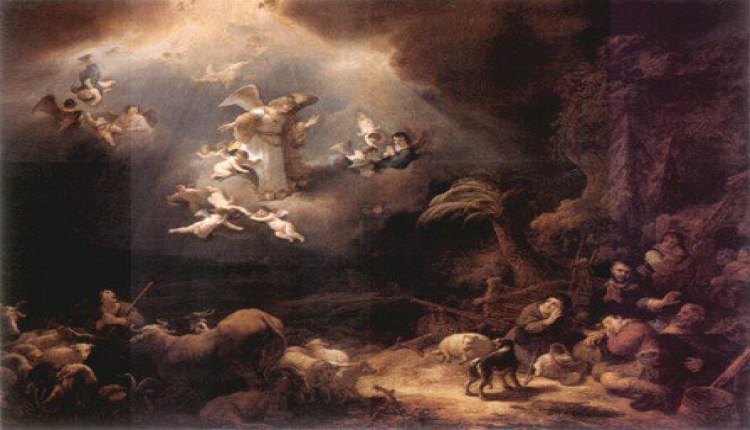
Every Christmas season we sing “Hark the Herald Angels Sing”
But is this correct? Did the angels sing? Let’s look.
Luke 2:13-14
“And suddenly there was a multitude of the heavenly host praising God, and saying, Glory to God in the highest, and on earth peace, good will toward men.”
Next please read this fine article from Guarding His Flock
*****************************
The Night of Nights
by Pastor Larry for Christmas
As reenacted in nativity scenes and Christmas pageants down through the history of western civilization, in various ways this story, whether in part or whole, is told:
God promised Israel a coming Messiah. God chose a teenage virgin to be the mother of Israel’s promised Messiah. The virgin was engaged to a young and moral carpenter. A crisis pregnancy occurred. An angel of the Lord alerted Joseph that Mary’s child was conceived by the Holy Spirit. Angels announced Messiah’s birth to shepherds on a night vigil near a little Judean town of Bethlehem. Magi from the East visited the infant. To preserve the rights of his royal family to reign, paranoid King Herod ordered infanticide.
On the very night of our Savior’s birth, Luke, a physician turned historian, records that, “there were some shepherds out in the fields keeping watch over their flock by night” (Luke 2:8). Possessing gnarled and scared hands and countenancing weather-beaten faces, these ordinary men worked the grave-yard shift protecting their sheep, some of which were probably marked to be eventually sacrificed at the temple six miles distant. With slings, crooked staffs, and studded clubs, these men risked their lives to protect their sheep from predatory animals and criminal rustlers. Unbeknownst to them, one particular night was a holy night. The sheep were resting comfortably. The only sound that penetrated the quiet night was an occasional “baaaa!” of a sheep. Whether standing or sitting, these nameless shepherds breathed in the crisp night air as they fought off sleep’s beckoning call. It was a night like many others until . . . .
The night sky suddenly exploded with the light of God’s glory, a bright light that revealed the menacing form of an angel standing nearby. The sight of the angel terrorized these veteran guardians of the night. Had the angel of death come for them? This season, Hallmark will design, print, distribute and sell millions of Christmas cards. Many of these cards will bear images of cuddly, winged, and romantic looking angels. I doubt that any will bear the intimidating visage of “an angel from the Lord” who frightened to death those veteran shepherd-warriors, and who therefore uttered to them, “Do not be afraid” (Luke 2:9-10).
In contrast to the warm and fuzzy feelings people experience during this time of year, it might strike a disconcerting note to even the casual reader of the gospels that fear was a pervasive emotion of the first Christmas. Matthew records that, “[A]n angel of the Lord appeared to [Joseph] in a dream, saying, ‘Joseph, son of David, do not be afraid to take Mary as your wife’” (Matthew 1:20). When he saw an angel of the Lord, Luke records that, “And Zacharias was troubled when he saw him, and fear gripped him. But the angel said to him, ‘Do not be afraid, Zacharias’” (Luke 1:12-13). The angel also told Mary, “Do not be afraid, Mary; for you have found favor with God” (Luke 1:30). Contact with the supernatural angel from the Lord was unnerving. Maybe we have come to feel too cozy with the Christmas story. Perhaps we ought to be a bit more unnerved when we hear the recounting of when God visited this planet in the form of an infant who upon reaching mature manhood, would be crucified for the sins of His people.
The shepherds were ordinary men God allowed to experience an extraordinary visitation that night. James S. Stewart asks, “And is there not a world of meaning in the fact that it was very ordinary people, busy about ordinary tasks, whose eyes first saw the coming of the Lord?” Then he answers,
It means, first, that the place of duty, however humble, is the place of vision. And it means, second, that it is men who have kept to the deep, simple pieties of life and have not lost the child heart to whom the gates of the Kingdom most readily open.
To these herdsmen, God first entrusted the Good News that a baby had been born nearby during their night vigil, an infant “Savior who is Christ the Lord” (Luke 2:11). That Baby lying in an animal feeding trough signaled to them the birth of God’s only Messiah (See Romans 10:9-10.).
To these shepherds God first entrusted the gospel message, and it was their vocation that would provide the intimate and pastoral illustration of Jesus’ relationship with His followers. He is the Good Shepherd who calls and cares for those sheep who “hear his voice” (John 10:1-14). And for reason of His care for us, we need not fear either.
source
http://guardinghisflock.com/?p=657
********
Okay….does it really say in the Bible that Jonah was swallowed by a whale?
 DiscernIt
Recent Comments