
You are currently browsing the category archive for the ‘religion’ category.
No, Christianity Should Not ‘Welcome’ or ‘Include’ Your Sinful Lifestyle
By Matt Walsh
I got this email a few days ago insisting Christians need to be more “inclusive” of open homosexuals. It’s a popular notion these days, so I thought I’d share this with you and respond here publicly:
Matt, you put yourself on a pedestal as this “great Christian” but you do more harm to the religion than anyone else. As a gay man I can say I’m happy to see how finally a lot of Christians and different churches are realizing that Christianity has to be INCLUSIVE of the LGBTQ community and other lifestyles. Not judging of them. Gays and trans people have felt alienated by Christianity and now progressive Christians have finally started to pull the religion into the 21st century and reach out to all of us. Jesus preached tolerance for all people and lifestyles not HATE. The prodigal son was WELCOMED back not told to go away! You are still trying to make divisions and tell some of us Christians we are not Christians just because we live differently. You are a truly sh*tty person and you come off as a bad writer and an uneducated idiot. Just stop talking. You make Jesus mad every time you write your garbage.
-A gay man who loves Jesus
Hi. Thanks for writing. A few points.
First, as I’m constantly reminded, the sins of homosexuality and fornication have existed since Biblical times. Still, it was prohibited in the Old and New Testaments (Genesis 19:1-13, Leviticus 18:22, Romans 1:26-27, 1 Corinthians 6:9) and by every Christian church for the first 20 centuries of Christianity’s existence. Since you are a self-identified Christian who thinks the moral teachings of the Bible should now be suddenly updated, I have to ask: What changed?
What was revealed in the last few years that proved the prophets, the apostles and all Christian denominations until recently wrong? What new piece of information did humanity obtain? What great revelation occurred? You think a 2,000-year-old faith that professes timeless Truths should “keep up” with the whims of modernity, but why? What do we know in our time that the Church didn’t know — that God Himself didn’t know — up to now? Be very careful in how you answer that question.
Second, I have never referred to myself as a “great Christian” — or a “great” anything for that matter — so I’m not sure why you put “great Christian” in quotes. I consider myself a greatly flawed Christian, even a “sh*tty” one, as you so helpfully and compassionately noted.
See, you need to stop reading with your emotions and read with your brain, man. Your emotions tell you that anyone who advocates virtue is automatically claiming to be virtuous, because it’s easier to dismiss a point based on the perceived motivations behind it rather than consider the point on its own merits. It’s like I’m saying two plus two equals four, and you’re countering that I’m not such a brilliant mathematician. Well, right, but I never said I was a brilliant mathematician. I just said two plus two equals four, because it does, and because even a stupid man can see that.
It’s difficult to have grown-up conversations these days, because people like yourself see every mention of moral truth as either a personal attack or a statement of superiority. This is the real damage you cause in the Faith. It’s not that you’re sinful — we all are, to be sure — it’s that you want to be coddled. You want to shut down professions of Truth that are inconvenient or uncomfortable. You want to modify Christian teachings not because you tried them and found them wrong, but because, to paraphrase Chesterton, you found them difficult and don’t want to try them.
I have many sins, but I will not tell you they are not sins. I come to Christ a sick and broken man looking for healing. You apparently come a sick and broken man looking to be assured you were never sick and broken to begin with. That is the only real difference between us. Or I should say, it’s the only real difference between Christians and “progressive Christians.” Both groups are sinful, both groups are weak, both groups need Christ desperately, but one wants — though they may so often fail — to go Christ’s way, and the other wants Christ to go theirs.
Third, I’m tired of hearing this “inclusive” stuff. Yes of course the Faith is made for people like you. It’s made for all people. It’s not a cult or a club. There’s no entrance exam or membership fee. Christianity is for everyone. If that’s what you mean by “inclusive,” fine, but a better word would be “universal.” In any case, that isn’t what you mean, is it?
When you ask for an “inclusive” Christianity, you ask for a Christianity that, rather than calling you to serve it, bends down and serves you. You’re asking to be “included” in the Faith on your own terms. That’s just not how this works, brother. As Christians, we have no authority to “include” you in that way. You must include yourself.
We go out into the world and proclaim the Gospel. We offer an invitation. We extend a greeting. We fight to win souls. But the souls must come of their own accord and must accept the Truth of Christ willingly and in its fullness. You must enter into the Truth. You must be the one who accepts it. You must be the one who “includes” the Truth in your life. Your lifestyle must change to accommodate the Truth, not the other way around.
By the way, Jesus never uttered the word “lifestyle,” much less did He preach that they all ought to be tolerated. Recently, we’ve started referring to sins as “lifestyles” and pretending that this rhetorical maneuver somehow changes the morality of the issue. It doesn’t. A sin is still a sin, and He instructs us all to “go and sin no more” (John 8:11), which often means dramatically altering our lifestyles.
Indeed, when people came to follow Him in Scripture, He told them to first leave their earthly pleasures behind and then continue along the road (Luke 18:22). He made it very clear that there is in fact a correct lifestyle, a correct way to live, and that way is narrow. Matthew 7:13 tells us the broad and “inclusive” road is the one that leads to damnation. You must choose, then, to walk through the right path, the narrow path, but it will be difficult and demanding, and it will not and cannot be widened to include you.
We all struggle with sin. But struggle is the keyword. Struggle. Fight back. Plead with God in agony to help you defeat these demons. Go to Christ begging that He help you overcome your temptations and live with chastity and temperance. Don’t demand that your sin be allowed to accompany you into Heaven. It can’t. We can accompany our sins into Hell, or ditch the whole ugly package on the side of the road and come Home.
In “The Great Divorce,” C.S. Lewis said, “If we insist on keeping Hell, we shall not see Heaven: if we accept Heaven, we shall not be able to retain even the smallest and most intimate souvenirs of Hell.”
That’s our choice, in a nutshell.
Yes, as you mention, the Prodigal Son (Luke 15:11) was welcomed back by his father. But have you read the entire parable? The son realizes the error of his ways, makes the journey back home, and when he arrives he pleads for forgiveness. “Father, I have sinned against heaven and against you. I am no longer worthy to be called your son.” Wow, that’s, like, a pretty intense declaration. Notice he didn’t waltz back to his dad’s place and casually brag that he blew his fortune on hookers and booze but he’s not sorry and intends to get right back to it first thing tomorrow. If he had, I think the story would have ended differently.
We see the same sort of thing play out in the passage about the two criminals crucified next to Christ (Luke 23:39-43). One of the criminals is unrepentant and demands that Jesus rescue him from his fate and allow him to continue on sinning. The other realizes he deserves his punishment and, in those final moments before death, professes his faith in Christ and repents of his sin. Christ assures the repentant man he will be with Him in paradise. Our Lord very noticeably does not make this guarantee to the other. A really bad sign for that dude, to say the least.
But for the penitent criminal, imagine the joy. What a beautiful thing, what a privilege it must have been to die next to Christ, to be forgiven everything he’d ever done and welcomed into eternal salvation. Now, that is inclusive. And that is an opportunity open to all of us.
It’s so simple, really. The message is so hopeful and good and joyous, which is why I resent attempts to dilute it into oblivion. All we have to do is follow Christ, spread the Gospel, fight against our sins, and repent for the times when we fail in that fight. That’s all. That’s the “how to” of Christianity. It seems you want to remove, well, all of those ingredients and still call yourself a Christian. You might as well remove all the yeast and flour from a mixture and call the goop of water, butter, and salt that remains “bread.”
I’m reminded of a great moment from a fantastic book called “The Power and the Glory,” set during the persecutions in 1930s Mexico. The protagonist, a sinful, degenerate, alcoholic priest with an illegitimate daughter, is facing execution for his faith. Hours before they march him to death by firing squad, he’s in his cell reflecting on his life and praying for forgiveness:
He felt only an immense disappointment because he had to go to God empty-handed, with nothing done at all. It seemed to him at that moment that it would have been quite easy to have been a saint. It would only have needed a little self-restraint and a little courage. He felt like someone who has missed happiness by seconds at an appointed place. He knew now that there was only one thing that counted — to be a saint.
Powerful. The man knows he has failed God so many times in his life, he lacked even the little restraint and courage that was required to follow Christ perfectly, yet because he believed, because he repented, because in these final moments he hungers for the Lord’s embrace, he will enter Paradise all the same.
Inclusive? Sure. I’d call that inclusive.
The point is, Christianity includes us, Christ includes us, but He will not include our sin. We have to choose to shed our sin, pick up our cross, and follow Him. That’s what it means to “be included.” You say that’s what you want, but do you? Do you want to leave your earthly pleasures behind, cut off whatever parts of your life are causing you to sin (Matthew 5:30), and die with Christ? I can’t answer that question for you. I have a hard enough time answering it affirmatively myself every day.
Christianity is truly a simple formula, but a painful one. If we will not include the pain and sacrifice in our lives, we will not include the Faith.
Fourth, Christians churches in America were never guilty of “alienating” unrepentant sinners like the “LGBTQ community.” They are so attached to their sin that they literally define themselves by it. They look for ”community” not with the Body of Christ, but with those who share their urges and fetishes. They elect to reject the difficult aspects of the Faith. They alienate themselves.
There are many accounts in Scripture where Jesus delivers a controversial message that is hard for people to accept, and many of his followers abandon Him altogether because of it. You’ll notice that Jesus never backtracks and apologizes. He never chases them down as they walk away and explains that He didn’t really mean all that stuff and really they were just taking it out of context.
In John 6, after Christ proclaims Himself the bread of life, many of his disciples are upset and threaten to leave. He does not beg them to turn around. He just continues right along speaking the Truth. He does not change His Word to cater to those who choose not to accept it. They are alienated by their sin, not by Him.
With that said, I do think many churches are guilty of alienating a certain group. As others have pointed out, the minority that rightly feels disaffected are those striving to live the Christian life. While western Christendom has worked so hard to shelter and welcome people who do not even desire to follow His Word and who, in fact, wish to subvert and change it for their own purposes, the ones really left out in the cold are those who try to be virtuous, chaste and faithful.
The Christians who would now be called “extremist” or “fundamentalist” or “conservative,” who stand against the cultural tide, who resist the temptation to succumb to the heretical fashions of the day — these are the Christians we need to include more. They have accepted the Faith for what it is, they are trying, though imperfectly, to walk through the narrow gate, but what do they find? Churches that treat them like nuisances. Church services designed to appeal to the secular crowd at the expense of giving the faithful the sacred and invigorating experience they deeply crave. Christian leaders who provide no leadership. A faith muted and watered down for the benefit of those who wish to destroy it.
These believers are trying their best to keep their hearts pure in a society that heaps mockery and scorn upon such efforts. They despair sometimes wondering how they’ll ever manage to raise their children to love Jesus in a country where even His supposed followers celebrate sin and bestow blessings on the worst kinds of evil. They’ve watched their nation discard virtue and truth and God. They feel isolated. They feel betrayed. They are beaten and exhausted in their fight against sin because they feel like they are fighting alone. They feel like Christ on Calvary shouting, ”My God, my God, why have you forsaken me?”
Of course, God has not forsaken them. But many Christians have. Many churches have. Many pastors have. Many Christian leaders have. They need to be equipped, encouraged and inspired in their mission to defeat sin, follow the Word and walk the narrow path to salvation, but these Christians are frequently left wondering where to turn.
Certainly the culture is no help. The education system is usually just another obstacle. The government, the media, even sometimes their own families are against their quest for holiness. So they run to their churches and their ministers and their fellow Christians and often they are greeted with secularized gospels and “progressive” gospels and “prosperity” gospels and gay gospels when all they want is the Gospel, in all its truth and fury.
John Chrysostom said the Holy Scripture should be “engraved upon our hearts.” There are some Christians who wish to adhere to it with that level of severity. They are the minority that all churches should be bending over backwards to embrace. They are the ones who need to be included again. They are the life of the Faith in this country.
Frankly, the church has not failed if it makes open homosexuals or anyone else feel uncomfortable in their sin. That is a success. That is the church doing what it’s supposed to do. But it has failed if it makes the faithful and the sincere feel unwelcome. This is the real problem, the real crisis.
I’ll pray Christian churches in this country always “include” the Truth, not liberal sexual dogmas or any other form of blasphemy.
As for you, I’ll pray you leave your sin behind and come to Christ remorseful and empty handed, ready to be His servant.
As for me, please pray I do the same.
God Bless.
Source
It’s all fun and games…’til someone actually defines Christianity.
I’m a Christian.
You’re a Christian.
Practically everybody in America is a Christian.
Naturally then, this makes practically every politician in America a Christian (Barack Obama, George H.W. Bush, and Bill Clinton included, of course).
Just ask ’em.
When they respond by saying that they’re a Christian, that can only mean one thing: They’re a Christian. More often than not, they’ll claim to have been a Christian for a loooong time (sometimes from birth, even).
So if there’s one thing we know, it’s that we have oodles and oodles of professing Christians ’round here in ‘Merica. We have bucketloads and truckloads of supposed followers of Jesus Christ here in the good ol’ U S of A.
[insert “U! S! A!” chant here]
Which makes this whole “steaming pile of a wrecked culture” thing kinda mystifying then, right? I mean, if we have all o’ these “Christians” wandering the countryside and permeating the American culture, how is it that said culture is in the midst of a headlong qualitative free-fall into oblivion that only seems to be accelerating in severity and momentum by the minute?
The answer is as obvious as it is hated by most professing American Christians. The answer is that most professing Christians simply aren’t really Christians at all. For all of the sweet vague talk about Jesus, Christianity and the like that may pour from their lips, they are actually vigorously and personally opposed to the true confrontational and corrective Gospel of Jesus Christ. Where true Christianity brings light and life to every aspect of life, their version of Christianity is just another dead religion in a box. (See: Christianity in a Box: Containing the Contagion of Obedience to Christ.)
And that, friends, is “the truth that dare not be spoken”. Proclaiming that fairly obvious, glaring, yet also very hard and convicting truth is something that you just…don’t…do.
Not in “Christian” America.
And why?
‘Cause it’s not nice.
It’s not loving.
As the world and Satan defines things like “nice” and “loving”, anyway.
You just don’t ask American professing Christians what their claim to Christ actually means in any kind of detail. You dare not challenge them that way.
That’s rude!
It’s disrespectful!
And you really don’t ask ’em to define their understanding of things – like the term “Christian” itself – directly and exclusively from [*gasp*] the Bible. I mean, how rude is that, right?
And disrespectful, too!
And ya really, really don’t ask ’em how they go about applying what the Bible says about everything in their daily lives because…well…when it comes right down to it, they just don’t care what the Word of God says in detail.
If they don’t care about what it says in the first place, they’re obviously not interested in applying what it says to anything that makes them uncomfortable or challenges their assumptions, traditions, and feelings. They’re not up for testing themselves to be sure that they’re in the faith, as the Word commands (see: 2 Corinthians 13:5), because the faith that they have simply isn’t biblical Christianity, however much they may like the sound and comfort of using that label.
They want the word or the tag of Christianity, but not as a term rooted and defined by the binding, sufficient, authoritative, and supremely loving details contained in the Word of God. No, they don’t want that Christianity. They want the one that is just a synonym for “nice”. Or “loving” Or…you get the picture.
They want the term “Christianity” as it is redefined by their own personal emotions, traditions, hopes, and desires, rather than a true biblical Christianity that is defined by the Nature of God as revealed in His Word. (See: The Rise of Mr. Potato Jesus)
So for them “Christian” means “nice”, with a purportedly deep and spiritual cherry on top.
They want to claim Christianity without seeking to know and submit to Christ as King in practice.
And if you dare point these truths out, you know what you are?
Finish article HERE
| Are There Blood Moons Rising? with Mark Hitchcock (part 1) |
|
Gary: Welcome to Search the Scriptures 24/7, a radio ministry of The Berean Call featuring T.A. McMahon. I’m Gary Carmichael. Thanks for joining us. In today’s program, Tom begins a two-part series with guest Mark Hitchcock. Here’s TBC Executive Director, Tom McMahon.
Tom: Thanks, Gary. The subject for today and next week is what some are teaching about what the Scripture refers to as a blood moon. Now, it’s generated quite a bit of excitement as well as controversy, and, as most of our listeners know, the mission of this program and The Berean Call is to compare whatever is being taught in Christendom today with what is presented in God’s Word. And on board to discuss prophecy and in particularly the current teachings regarding blood moons is Mark Hitchcock. He is the pastor/teacher of Faith Bible Church in Edmond, OK, and the author of a number of books dealing with biblical prophecy. His perspective from his book Blood Moons Rising, which we, by the way, offer here at The Berean Call, will be central to our discussion.
Mark, welcome to Search the Scriptures 24/7.
Mark: Yeah, thanks for having me. It’s great to be with you.
Tom: You know, Mark, most of your…well, I didn’t realize this…most of your two dozen-or-so books deal with biblical prophecy. Now, I have to ask you, what sparked your interest in Bible prophecy, and what value do you see in prophecy for believers-and even those who don’t know the Lord?
Mark: Well, I got interested in Bible prophecy a little bit when I was around 11-12-13 years old. That’s back when The Late Great Planet Earth came out. I’m sure many of the listeners will remember that. In May of 1970 – is when the Late Great Planet Earth. A lot of people [were] interested in that, and the youth group I was in – a lot of talk about it. At that time, it just kind of at that time…my interest was piqued, but when I really became interested in prophecy was in my early twenties. That’s when I really began to study the Bible seriously for myself, and really, it rose out of the issue that when I read the Bible, there were so many parts of the Bible I couldn’t understand, and I finally realized that if I would understand Bible prophecy, since 28 percent of the Bible was prophetic at the time it was written – that if I understood prophecy, I could understand the Bible.
So, really, my love for prophecy is my love for the Bible. And I just felt like – and I still feel that way today – if you don’t understand at least some of the basics of prophecy, there are just large portions of the Bible that remain an enigma. So that’s really a lot of my interest in it, and I do think as well that it’s very relevant today for believers. Obviously, it’s a cleansing hope that we have – a purifying hope – that we believe Jesus could come any time. It’ll change the way that we live. It helps us understand this world around us. We live in a world that’s chaotic and uncertain, and we know how the story ends when we understand the Bible. So it’s a great comfort and hope that we have.
And to me, the message for unbelievers is that Jesus could come back at any time. They need to be ready. And I think even a lot of unbelievers, a lot of secular people, have the idea that this world’s getting near closing time. And I think that Bible prophecy has a unique message, because people are innately interested in the future. They’re curious about it. And we can come in with Bible prophecy and what the Scriptures say, and we can use that to set the table, if you will, as a platform, then, to reach people with the message of the gospel of Jesus Christ.
Tom: You know, Mark, you mentioned The Late Great Planet Earth. At that time – I was a Roman Catholic for almost 30 years – and it was at that time that I came to the Lord. And, just as you mentioned, you were 11 and 12 – well, I was in my thirties, and, Mark, I got really excited about prophecy and this thing called the Rapture because, as a Roman Catholic, forget that! You know, we were never given any kind of teaching about prophecy, although some of the so-called Saints promoted their ideas about the way things were going to happen. We had the “Secret of Fatima,” and all of those kinds of things, but nothing like biblical prophecy. And I really got excited about it, and, as I said, especially the Rapture! I mean that’s so foreign to Roman Catholicism, and especially, then, getting to know Dave Hunt and starting to work with him – you can imagine, that love for prophecy and love for God’s Word never…it just continued to grow and grow and grow.
Mark: No, that’s right. And it does. It’s such a framework for really understanding what the Bible says, and people are interested in it, and, again, we don’t just talk about things because people are interested in it, but on the other hand, if there is something that people are innately curious about that the Bible deals with and talks about a lot, and certainly we should talk about it at least some. And we don’t want to make Bible prophecy a hobby horse, or that’s all we talk about. I’m the pastor of a church, and so most of the time when I preach, it’s not on prophecy. I’ve written a lot of books on it, but I speak most of the time on things not prophecy related.
But God’s people need a well-balanced diet. Bible prophecy and eschatology and study of the end times, it’s certainly a part of that.
Tom: Now, Mark, before we get to blood moons, which we really want to get to because it’s an issue today, but I think back about prophecy and the value of prophecy – I mentioned working with Dave Hunt, and we have written about this and promoted prophecy as an incredible apologetic. Now, as you know, God declares Himself as the God of prophecy and that He alone knows the future, and that’s a criterion for being the only true God.
I was stunned going through (not recently, but over the years) going through Isaiah, and in chapters 41-48, over and over and over again, God claims that He alone knows the future, and He challenges the “gods” – that is, the demons, actually, behind the idols – to foretell what’s ahead. We also know, as you mentioned, 28 percent of the Bible foretells future events.
Now, as an apologetic, don’t you think that’s just a wonderful, incredible, tremendous proof that the Bible is indeed God’s Word? What other book can do that?
Mark: Not a thing! I mean, to me, it is the proof of the authenticity of the Bible, because, you know, people will say, “Well, the Bible changes people’s lives.” Well, other people can say, “Well, I have a book here, and it changed my life.” So that’s a subjective reference. To me, it IS Bible prophecy. That’s what God says, as you mentioned in Isaiah. He’s saying, “This is the…I’ll lay down the gauntlet here. Let someone else come and tell the future with 100 percent accuracy.
Dr. John Walvoord, who was one of my mentors at Dallas Seminary, he has a book Every Prophecy in the Bible, and he has about a thousand prophecies, and his research found that 500 have been fulfilled, and there are 500 yet to be fulfilled. Now, that’s quite a track record! A 100 percent accuracy 100 percent of the time. And only someone who is omniscient and omnipotent can tell the future. And so, to me, Bible prophecy, the fulfillment of prophecies, with great exactness – 100 percent of the time – is the ultimate apologetic for the truth of the Word of God.
Tom: Amen. Amen. Of course, on the other side of the coin, there is a down side regarding biblical prophecy, but I’m talking about its abuse. We’re going to talk a little bit about that. But I want you to give me some of your thoughts about the following – you know, just briefly or however long you want to take.
False prophecy and false prophets, Old Testament and New, and the Bible issuing really serious warnings about such things; the abuse of prophecy: what are your comments on that?
Mark: Well, prophecy is so valuable. Again, it’s this great apologetic for Scripture, and God claims He’s the only one that can do it, and prophecy – really, it’s a precious thing – that God would come and reveal to us the future – what’s going to take place. And when people come in and claim to be speaking for God and they’re not, and they abuse this prophetic gift – and, of course, they can’t really foretell the future, but they claim to be able to – then, as we’ve seen in modern times, first of all, it gives prophecy, it gives the Bible, a black eye; it gives God a black eye, because many people then think, “Oh, well, then, the Bible’s wrong!” or “Well, God is wrong!” Where actually, it’s not God who’s wrong; it’s this person, because they just went out on their own and God doesn’t speak through them at all.
So it’s very…it’s so dangerous because, again…and, of course, Satan comes in and takes what God uses, and what God has for good, and he comes in and he twists it and he counterfeits it, and he comes in to get people to where their confidence in the Bible is eroded, their confidence in God is eroded. And so Satan has used that throughout history: false prophets, false teachers, that come in to lead people astray from the truth. And we’ve seen that throughout church history.
But the Bible tells us that in the end times that’s going to proliferate even more. False prophets, false teachers. I think it’s interesting – the last book in the Bible before the book of Revelation is that tiny little book of Jude, which is about apostasy in the church. I’ve heard many people describe Jude as the foyer, or the entrance, to the book of Revelation. So it’s interesting, the placement of these books in the Scriptures as well as their inspiration – the words being inspired.
Tom: And you know, you mentioned that when you preach and teach you want to present the full counsel of God, but I think about Jude, you know, it seems that he…when he started, he said, “You know, I’d really kind of like to deal with the deeper things of God. However, I must tell you this: you must earnestly contend for the faith.” So, you’re right. It’s very important. The other thing that you mentioned about God kind of throwing down the gauntlet for the idols, the demo ns behind the idols, was to prove that they are God, too. Well, we go back to Genesis 3:1: “Yea, hath God said…” you know, and then basically, the serpent, Satan, in calling God a liar: “You will not surely die.” Well, here we have the same thing with all the proliferation of psychics and fortunetellers, channelers, mediums, astrologers, and so on – that seem to me that’s an attempt at “hey, look, God’s not the only one that can do this.”
Mark: That’s right, and there’s a lot of these things out there happening today, more and more. Because, again, I think as times become more uncertain, there’s more chaos, there’s more confusion in the world, people want even more so to know “What’s going to happen?” And, of course, the Good News is God has told us, at least a lot of what’s going to happen in the Bible. He hasn’t told us everything, but He’s told us what’s going to happen, and we can know our own destiny, and that’s the Good News. But people want more than that. They’ll reject…It’s always fascinating to me. It’s tragic. People will reject the truth of the living God, who’s given 500 prophecies that have come true – they reject that, and they’ll go after some flimsy prophecies and things out here that have no basis whatsoever. It really shows the hardness of the human heart apart from God – God’s Spirit.
Tom: Yeah. My concern is a zealousness. Some run ahead of God in applying what they think is prophecy being fulfilled. Now we know the prophecy related to the establishment of the nation of Israel – 1948. I mean, that’s clear cut. You have the scriptures to back that up. But, Mark, my concern is those who see prophecy being fulfilled in every current event, you know, even to the point – we’ll take something major, like the attack on New York City, 9/11 – doesn’t that create some problems and some issues?
Mark: Sure it does, and basically that’s historicism, where people are just saying all these prophecies are being fulfilled today, and they try to go back and find scriptures for these things. But we don’t live in the end times yet, I don’t believe. The Rapture’s not occurred yet. We’re not in the end times. We see the regathering of the nation of Israel; we see apostasy in the church – these are some broad prophecies we see fulfilled. But I think we live in a time today – I call it “stage setting.” We’re not seeing prophecies being fulfilled so much as we’re seeing the stage being set, the players moving into place for the future fulfillment of prophecy in the end times. So when we try to come in and say every earthquake is a sign of the times, every tsunami that happens, things not even mentioned in the Bible – that’s when we run into trouble. And, again, that’s when I think that if people continue to try to do that, and they continue to cry wolf like that, then we can almost get to where, you know, the people in the world no longer listen to what we have to say, although we do have a true message that we want to bring.
So I think that we have to be careful about that. You can go to either extreme with Bible prophecy. There is what I call skepticism – people don’t think that it matters at all. There’s sensationalism – where everything’s a fulfillment of prophecy. And the problem is if everything’s a fulfillment, then really nothing’s a fulfillment – or a sign. And there’s the view that I hold in between, which is what I call “stage setting.” Well, we do see the stage being set, and we’re aware of these things, but we want to be careful not to point to every event as some kind of fulfillment of a prophecy.
Tom: Right. I agree with you, Mark, to the extent that we certainly see things in development. You know, I’ve had the privilege – the great privilege – of working with Dave Hunt for about almost 4 decades – 3 ½ decades – and just from that standpoint of 30-35 years or so, just observing the trends coming into the church, you can see the development of the apostasy from the time (I think it was 25 years ago) when I helped Dave with The Seduction of Christianity – well, from that time until today, things are moving exponentially. But, as you said, specifics? No. But in general terms with regard to what the Bible says, we can see it growing and growing and growing. And there has to be a religion in place for the religion of the Antichrist. And we know ecumenism – lots of things that contribute to that, we should be aware of.
Mark: No, that’s right. There’s a lot of things happening in our world today, and I do think that we see events unfolding in our world today exactly the way we should expect to see them unfolding if the coming of our Lord is near.
But again, we don’t know how soon. We don’t know how much longer this stage setting can last. And that’s why I believe we’re called upon to always be ready.
Tom: Right. I absolutely agree. Now, let’s get to your book Blood Moons Rising. Mark, what motivated you to write that?
Mark: Well, I’ve studied prophecy for a lot of years, and I love to write books about things that are happening in our world today. Again, as we talked about the stage setting, and point to some of these things that call people to be ready. But I’ve also tried to answer things that are out there that I think maybe they’re taking it too far. For instance, I wrote a book on 2012, the Bible, the end of the world, the whole Mayan prophecy – the Mayan calendar prophecy – because a lot of people were kind of wondering about that, so I wrote a book to kind of critique or debunk that – whatever word you want to use.
And then some time later, I was reading about…or rather, listening to a pastor, a preacher on television, talk about blood moons, and these four blood moons that were going to fall on Jewish feast days, and relating all of this to some great event that was going to happen, and almost saying that the Lord was going to come back that year, but then kind of hedging his bets and backing off a bit. So I began to study that, and I came to the conclusion that really it was much ado about nothing. And I heard the different pastors and preachers talking about how there’s a book came out that’s selling a lot, and I thought, Someone needs to answer this, because a lot of people are going to be pulled into this unwittingly, and buy into this and thinks that what’s being said here is true, it’s factual, it’s biblical. So I wrote the book, basically, again, just to try to give an antidote or kind of an answer to some of this hysteria that’s going on out there about these things.
Tom: For some of our listeners who may be out of the loop on this, tell us about blood moon – the blood moon phenomena. Talk about it from, first of all, physics – the astronomical side, and then how that might relate to the blood moon as it’s presented in Scripture, or NOT related to the blood moon given in Scripture.
Mark: Well, what’s stated is that a blood moon is when the moon turns kind of an orange-ish or a reddish hue when there’s a lunar eclipse. And they happen a lot. Lunar eclipses happen fairly often. But what we have in 2014 and ’15 is four consecutive lunar eclipses on four Jewish feast days. And the first one was on April 15, 2014 – fell on Passover. Then on Feast of Tabernacles that Fall, October 8, 2014, there was another one of these. Then this last spring in 2015 on April 4, there was another one that fell on Passover, and then the final one is September 28, 2015, again on Feast of Tabernacles. So this is called…many call this a lunar tetrad. In other words, it’s these four blood moons falling consecutively on these Jewish feast days. And since the first century, there’s only been eight of these that have happened, and those who believe this is an important sign, they point to the Bible, like in Joel 2 it mentions the “moon turning to blood.” They point to Matthew 24, where the sun won’t give its light there; they point to Acts 2, which quotes Joel 2. Revelation 6, which talks again about the moon turning into blood, and they say these blood moons are mentioned here in scripture, and they’re falling on these Jewish feast days, and then they go back and show the last three of these, back in 1493 and ’94, one of those happened in conjunction with the Jews being put out of Spain: the edict of the expulsion of the Jews.
One happened in 1949 and 1950. Israel became a nation in 1948.
And then they point to another one of these tetrads happened in 1967 and ’68, which is when the six-day war happened in Israel. So they’re trying to point out how there’s this historical pattern that when these blood moon tetrads happened that that’s related to significant events in Israel, and then they relate it to these biblical passages in Scripture, and then they come up with this idea that this is significant of some great change that’s going to take place. They say something huge is going to change – going to change the world forever. Again, they don’t say specifically what it is, but many of them say it’s going to be some type of war in Israel. Many of them even kind of allude to the fact possibly it could be the Lord’s coming. And so they see this as a huge issue, 2015, this watershed, or this key year because of these blood moons.
Tom: Mark, I’ve listened to you in a…not exactly a debate, but a discussion with Mark Biltz, the author of Blood Moons: Decoding the Imminent Heavenly Signs, and you pointed out, and I’d like you to add to that, or give us your perspective, the tetrad – these lunar eclipses. They are natural events. The verses that you gave with regard to Revelation and Matthew 24, and so on, those are supernatural events, aren’t they?
Mark: That’s right. That’s the way I take it. In Joel 2, Matthew 24, Revelation and Acts 2, Revelation 6 – the moon turning to blood there seems to be…and I think it’s clear in the context…this is something that God is doing. This isn’t a naturally occurring event. God is doing this.
The other thing that’s fascinating, it’s a supernatural event, and if you read Revelation 6, it’s not just the moon turning to blood there. Same thing in Acts 2, there’s a whole litany of other signs there as well that will take place when the moon turns to blood. It says in Revelation 6 that the sun became black as sackcloth, the moon became like blo od, the stars of the sky fell to the earth. It said, “As the fig tree casts its unripe figs, shaken by wind; the sky was split apart like a scroll when it’s rolled up; Every mountain and island were moved out of their places.” No one – I don’t hear anyone saying that that’s going to happen this year.
The other problem is the context of these passages are at the end of the Tribulation period…
Tom: Exactly.
Mark: …or the late – well, the one in Revelation 6, I would place at about the mid-point of the seven-year Tribulation; the one in Joel and in Acts and in Matthew 24 I’d place near the end of the Tribulation. Well, the Rapture hasn’t happened yet, as far as I know. We’re not even in the Tribulation yet. So 2015 can’t be the middle or the end of the Tribulation. So there’s also this whole timing problem that’s difficult as well.
Tom: Yeah, and later…we’re going to do this in two parts, maybe in our next…well, not maybe, but hopefully, in our next session we’re going to deal with “signs” and pointing to signs and dates, and so on, and those equivocating on all that. So I want to talk about that, but let’s go back to…we’re recording this. It’s the end of April – April 4. It’s unique that these so-called blood moons are taking place during Passover week, but Mark, what of significance took place April 4 of Passover week?
Mark: Well, nothing that I know of… You know, it is interesting. It was the
day between Good Friday, of course, and Easter this year, it fell there, but nothing happened. So that’s been part of the problem – with these first three, nothing happened. But they’ll say, “Well, there’s the fourth one, you see, and this fourth one is going to be super moon. It’s going to be the only one of the four that’s actually visible in Israel, and so… Again, that’s kind of the way a lot of these things work is, you know, when something doesn’t happen and you keep kind of pointing ahead, but what will be interesting is after September 28 comes and goes, if nothing happens then, will they all recant then? Will they write a book and say, “I was wrong,” and not do that again.
That usually doesn’t follow in these things, and that’s part of the problem with this. There’s a lot of buildup.
But, you know, the other thing is if you look at our world today, if I were to make a prediction at the beginning of 2015 and say, “Something really dramatic’s going to happen in Israel this year, that probably would be right, because we live in a very dangerous, very chaotic, very uncertain world. Something – I mean, the fuse has been lit, and the lid could blow off over in the Middle East at any time. So, they do, in some ways – they make these statements, and in some ways, they do have these things on their side – at some point in time, something dramatic is going to happen over there. But it won’t be because of the Blood Moon prophecy. It’s just simply be because God, on His timetable, decided for it to happen.
Tom: See, Mark…we’ve got about two minutes left, but I want to just encourage you, because you’re presenting this stuff; you’re getting it out there to help…or to address the confusion that goes on in the body of Christ because they’re not checking things out. They’re not really doing their homework, which they should so that they’re not vulnerable to these kinds of ideas.
You know, back in 1999, Dave came out…Dave Hunt came out with a book called Y2K: A Reasoned Response to Mass Hysteria, because, as you remember back then, many in the church got on board with that. I mean, big names, especially those whose eschatology was either post-trib, they were kind of excited about it.
Mark: (chuckling) That’s right, yeah.
Tom: But you know what happened: the world…2000, the world celebrated! I mean there were fireworks all around – Paris, London, and everywhere, and the church was just getting off – not the whole church, but many leaders were hunkering down for something. So, this is important. It’s important to exhort, encourage, our b rothers and sisters in Christ to be Bereans, to search the Scriptures and do their homework when somebody comes along with an idea that’s somewhat unique or not really laid out clearly in the Scriptures.
Our guest has been Mark Hitchcock. We’ve been talking about prophecy and about blood moons in particular. So, Mark, I want to pick up on this next week, the Lord willing, so, thanks for being with me.
Mark: Yes, thank you so much. Looking forward to our next time together.
|

A thorough critique of Jonathan Cahn’s Mystery of the Shemitah, and I encourage readers to follow the link and read the entire article..
THE MYSTERY OF THE SHEMITAH: Is it real?
The Mystery of the Shemitah by Jonathan Cahn (Lake Mary, Florida: FrontLine, Charisma Media / Charisma House Book Group, 2014) 275 pp. paper 16.99
_________
The Harbinger by Jonathan Cahn became the #1 Christian book of 2012, set publishing records, reached publishing milestones and propelled the author to a very high-profile position on the national and even international stage. Because The Harbinger was riddled with biblical errors, theological flaws and historical misrepresentations, what started out as a 2-3 page book review, quickly turned into a book-length response and led to the Berean Call publishing my first book, The Harbinger: Fact or Fiction? 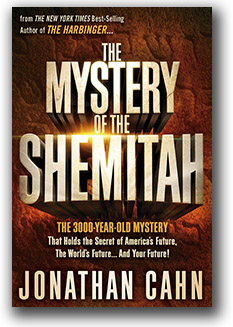
On September 2, Johnathan Cahn’s third book, The Mystery of the Shemitah was released to book retailers…
View original post 2,901 more words


Matthew Henry – Commentary on 2 Peter 2
September 25, 2015 in Bible, Bible Study, discernment, Life, religion | Tags: Commentary, False Teachers, Hell | Leave a comment
Matthew Henry – Commentary on 2 Peter 2
Chapter 2
The apostle, having in the foregoing chapter exhorted them to proceed and advance in the Christian race, now comes to remove, as much as in him lay, what he could not but apprehend would hinder their complying with his exhortation. He therefore gives them fair warning of false teachers, by whom they might be in danger of being seduced. To prevent this,
2Pe 2:1-3
2Pe 2:1-3
Men are apt to think that a reprieve is the forerunner of a pardon, and that if judgment be not speedily executed it is, or will be, certainly reversed. But the apostle tells us that how successful and prosperous soever false teachers may be, and that for a time, yet their judgment lingereth not. God has determined long ago how he will deal with them. Such unbelievers, who endeavour to turn others from the faith, are condemned already, and the wrath of God abideth on them. The righteous Judge will speedily take vengeance; the day of their calamity is at hand, and the things that shall come upon them make haste. To prove this assertion, here are several examples of the righteous judgment of God, in taking vengeance on sinners, proposed to our serious consideration.
2Pe 2:7-9
When God sends destruction on the ungodly, he commands deliverance for the righteous; and, if he rain fire and brimstone on the wicked, he will cover the head of the just, and they shall be hid in the day of his anger. This we have an instance of in his preserving Lot. Here observe,
2Pe 2:10-22
The apostle’s design being to warn us of, and arm us against, seducers, he now returns to discourse more particularly of them, and give us an account of their character and conduct, which abundantly justifies the righteous Judge of the world in reserving them in an especial manner for the most severe and heavy doom, as Cain is taken under special protection that he might be kept for uncommon vengeance. But why will God thus deal with these false teachers? This he shows in what follows.